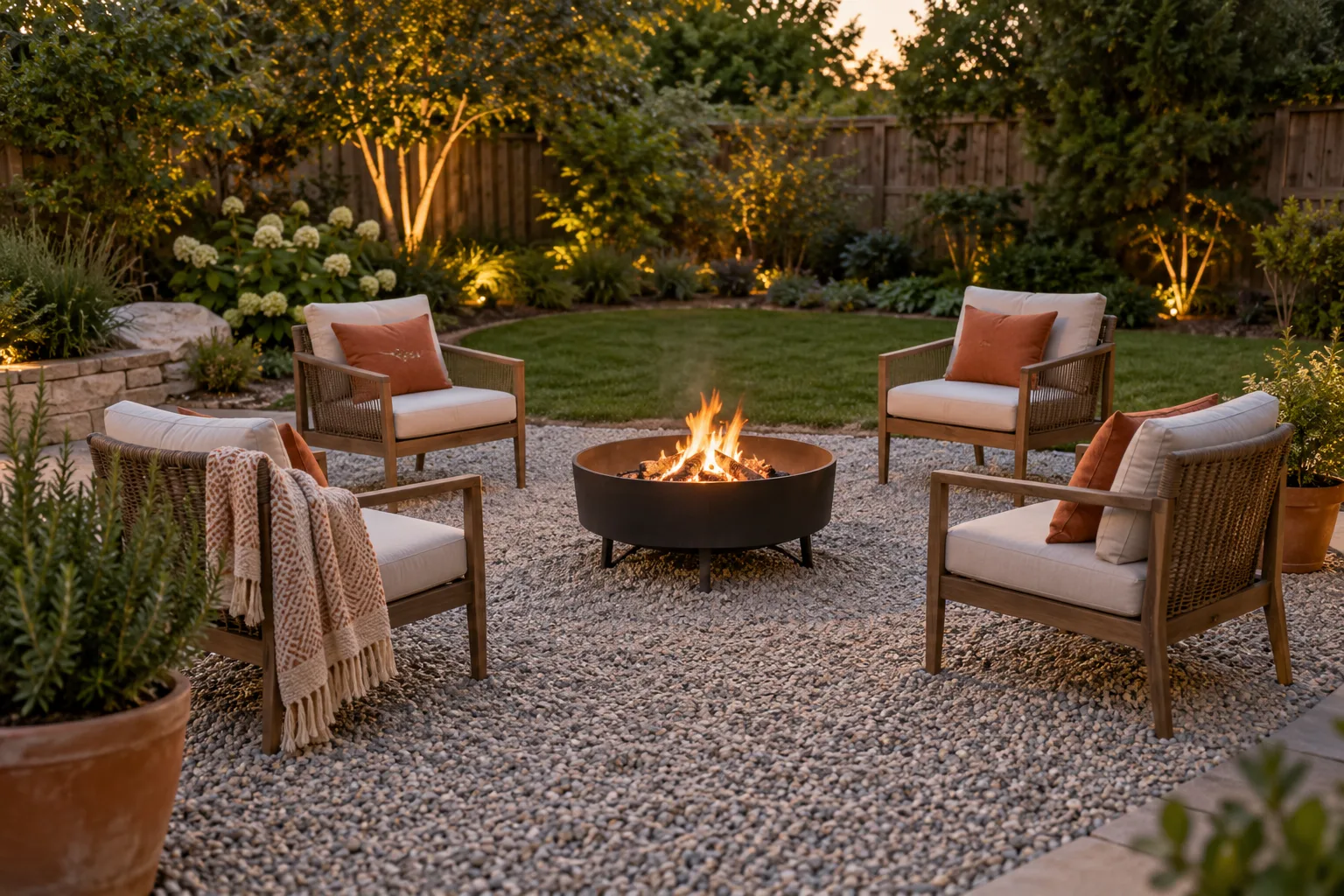
A compact fire pit is not automatically suitable for a compact backyard. The appliance footprint may be small while the required operating area, fuel handling, seating, ventilation, and separation from structures make the real-use footprint much larger.
Start with permission and placement, not appearance. Confirm that the fuel type and appliance are allowed at the property, then use the specific manufacturer’s installation and operating instructions together with applicable fire codes, local requirements, burn restrictions, lease terms, and HOA or association rules.
Non-negotiable first checks
- Use outdoor fire pits only in the outdoor settings permitted by their instructions; never use an outdoor combustion product indoors or in an enclosed space.
- Confirm the fuel type and appliance are allowed by the property owner, lease, building, association, fire authority, and local rules.
- Follow the specific manufacturer’s instructions for location, clearances, surface, ventilation, fuel, ignition, shutdown, and storage.
- Do not substitute a general internet clearance number for the requirements of the exact product and site.
- Keep required exits and emergency access unobstructed.
- Account for current weather, wind, burn bans, drought restrictions, and seasonal rules before every use.
- Have the extinguishing method specified by the manufacturer readily available and know how to shut the unit down.
Compact fire-feature types compared
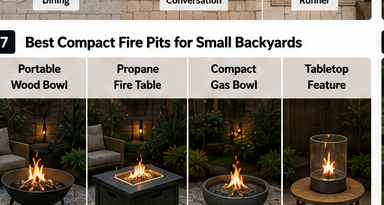
| Format | Why someone might consider it | Real-use issue to evaluate | Storage or fuel question |
|---|---|---|---|
| Portable wood-burning bowl | Traditional open-flame experience where permitted | Smoke, sparks, ash, fuel handling, and larger operating zone | Where will dry fuel and cooled equipment be stored? |
| Propane fire table | Combined surface and flame feature | Tank location, ventilation, controls, cover, and furniture spacing | Can the cylinder be handled and stored exactly as directed? |
| Compact gas fire bowl | Smaller appliance footprint | Connection, hose routing, ventilation, and approved surface | Is the fuel system compatible and professionally installed when required? |
| Tabletop flame feature | Targeted tabletop use where explicitly allowed | Table compatibility, stability, fuel, and nearby objects | How is fuel transported and stored under current instructions? |
| Enclosed portable fire appliance | Controlled format where local rules permit | Manufacturer-defined setup and ventilation still apply | Can it cool completely before movement or storage? |
Wood-burning pits demand a larger planning conversation
A small bowl does not reduce smoke, ember, ash, or fuel-management concerns to the same scale. Local rules may restrict or prohibit open burning, and neighboring windows, dry vegetation, fences, roofs, and changing winds can make a small yard unsuitable.
If a wood-burning unit is permitted, use only the fuel and accessories the manufacturer allows. Follow instructions for spark control, supervision, extinguishing, ash cooling, and disposal. Never move or store the unit until the instructions say it is safe to do so.
Propane fire tables combine furniture and appliance decisions
A propane fire table can replace a coffee table, but it should be evaluated first as a fuel-burning appliance. Check tank placement, access to controls, ventilation openings, hose routing, approved surfaces, cover use, and maintenance requirements.
Do not hide a cylinder or connection in furniture that was not designed for that purpose. Follow the product and fuel-cylinder instructions, and keep the route to the shutoff accessible.
Small gas features still need a complete system plan
A compact gas bowl may avoid stored wood and ash, yet connections, fuel supply, ventilation, and installation can add complexity. Use only compatible components and qualified installation when the manufacturer or local requirements call for it.
Do not route a hose through a doorway or active walking line. The visual size of the bowl says nothing about the placement requirements of the full system.
Build a site-specific placement plan
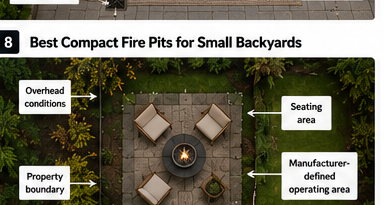
Draw the yard boundary, structures, doors, windows, steps, vegetation, overhead conditions, utilities, furniture, and required route. Then overlay the exact placement and clearance instructions for the candidate appliance. If the required operating area does not fit without compromise, the yard is not suitable for that product.
Clearances and restrictions are not universal. They vary by product, fuel, jurisdiction, property, weather conditions, lease, and association. Use authoritative local guidance and the current manufacturer instructions rather than treating this article as an installation specification.
Furniture should follow the operating plan
Select seating only after the appliance location is established. Lightweight chairs can drift closer during use, while deep lounge furniture may block the exit route. The arrangement should make supervision and shutdown straightforward.
For non-fire zoning ideas, see Small Backyard Ideas for Narrow or Limited Spaces. The visual techniques in How to Make a Small Backyard Feel Bigger can improve the yard without adding a combustion feature.
Storage and maintenance affect suitability
Check how the appliance must cool, clean, cover, and store. Fuel cylinders, liquid fuels, wood, ashes, and accessories each require handling consistent with current instructions and local rules. A small shed or storage bench is not automatically an approved fuel-storage location.
Inspect the unit before use as directed and stop using damaged, corroded, leaking, or unstable equipment. Replacement parts and repairs should follow manufacturer guidance.
Decision checklist
- Confirm the product type and fuel are allowed at the property.
- Read the current manufacturer installation and operating manual.
- Check applicable fire codes, local rules, burn restrictions, lease, and association requirements.
- Map the complete operating area, not just the appliance footprint.
- Keep structures, vegetation, overhead conditions, furniture, and exits in the review.
- Plan approved fuel handling, shutdown, cooling, cleaning, and storage.
- Choose another outdoor feature if the requirements cannot be met comfortably.
The takeaway
The best compact fire pit is the one whose full operating requirements fit the site and whose fuel, supervision, shutdown, and storage routine the owner can follow every time. In some small backyards, no fire pit is the responsible choice. Lighting, textiles, or a focal planter can create evening atmosphere without combustion.