Category: Balconies

Space-smart ideas and buying guidance for balconies.

  • Apartment Balcony Makeover Ideas That Still Leave Room to Move

    An apartment balcony makeover should make the space easier to use before it makes the space more decorated. A clear doorway, one comfortable activity zone, and a small number of deliberate details will usually feel better than furniture and planters arranged around every edge.

    Empty the balcony first. Clean the surfaces according to building guidance, mark the door and required route, and return only the pieces that support the balcony’s main purpose. This edit-first approach works for renters because many improvements can remain freestanding and reversible.

    1. Decide what the balcony is for

    Choose one primary use: coffee for two, solo reading, container gardening, or an open-air work break. A second use can be supported with a folding or movable piece. Trying to create dining, lounging, storage, and a full garden in the same narrow footprint usually leaves none of them comfortable.

    • Morning coffee: two upright chairs and one shared table.
    • Reading: one supportive chair, a movable surface, and a soft light.
    • Gardening: a slim freestanding plant shelf plus one seat.
    • Flexible use: folding furniture with a defined indoor storage location.

    If furniture is the first decision, use Best Balcony Furniture for Small Spaces to compare footprints and storage features.

    2. Protect the door and the route

    Draw the complete door swing or sliding-door access zone. Then identify the route that must stay open for normal use and required egress. For comfortable movement, a main path around 30 to 36 inches can be useful general planning guidance where the balcony allows, but it is not a universal requirement.

    Actual requirements vary by building, property, local rules, lease terms, and association restrictions. Door operation, required exits, drains, fire rules, and building instructions take priority. Do not place furniture where it must be moved to leave the space.

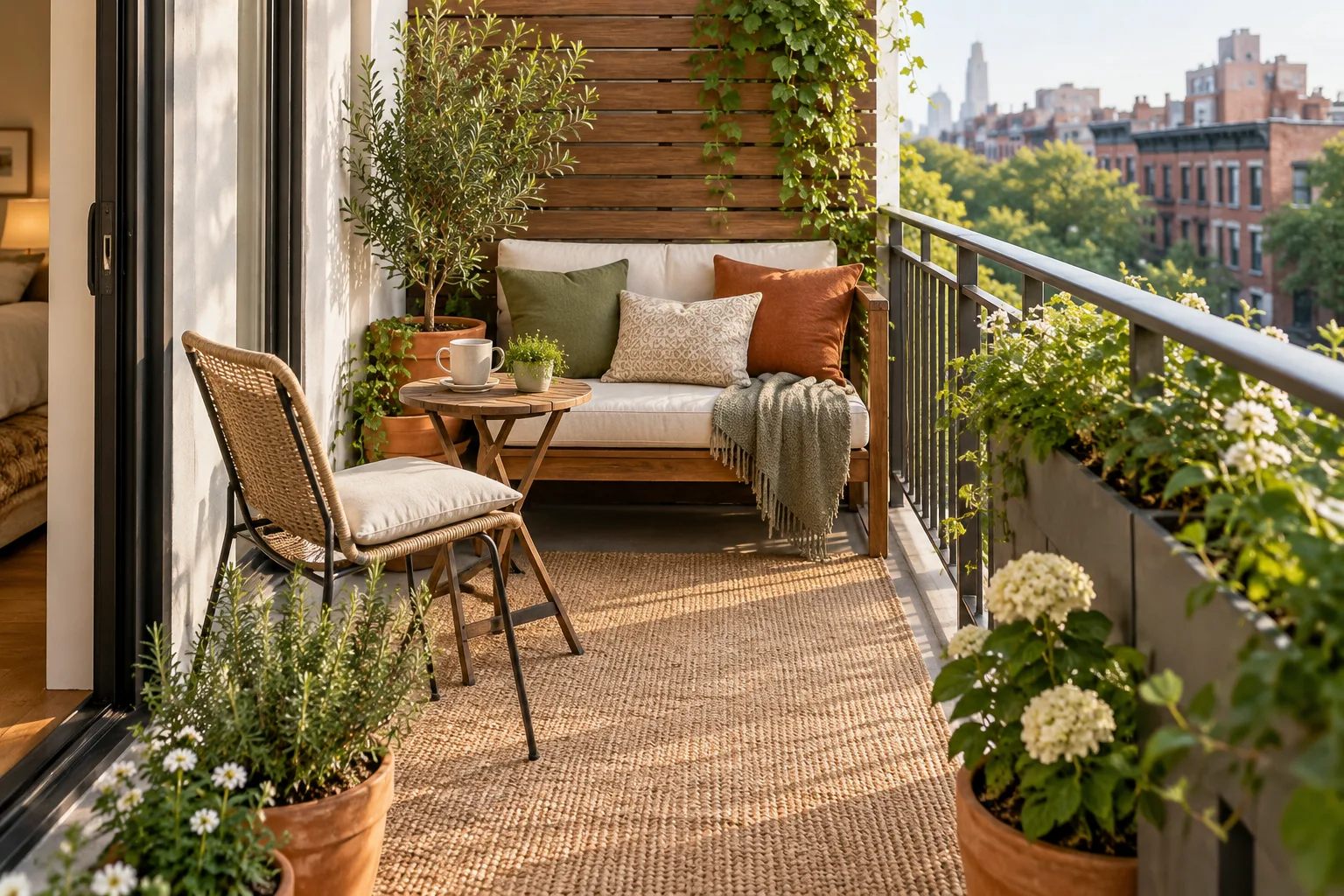
    Apartment balcony rearranged to keep the doorway and walking path clear.

    3. Use one furniture group

    Place the everyday seating together rather than scattering pieces along both sides. Two chairs and one table create a complete zone. A single chair with a small stool can do the same for one person. Keep the opposite side quiet so the floor reads as open.

    Outline furniture dimensions with painter’s tape and test the layout with the door operating. Include room to pull out a chair, fold a table, or use an ottoman. Product dimensions should be checked in the fully used position.

    4. Make the floor visually continuous

    A clean, largely uninterrupted floor makes a narrow balcony feel longer. Remove scattered pots, loose tools, and extra mats. One appropriately sized outdoor rug may define the seating area when building rules, drainage, door clearance, and surface care allow it.

    Removable deck tiles can change the look more dramatically, but renters should get written permission and confirm drainage, substrate compatibility, wind, and trip edges before installation. Never cover damage or block access to drains.

    5. Move plants to one maintainable zone

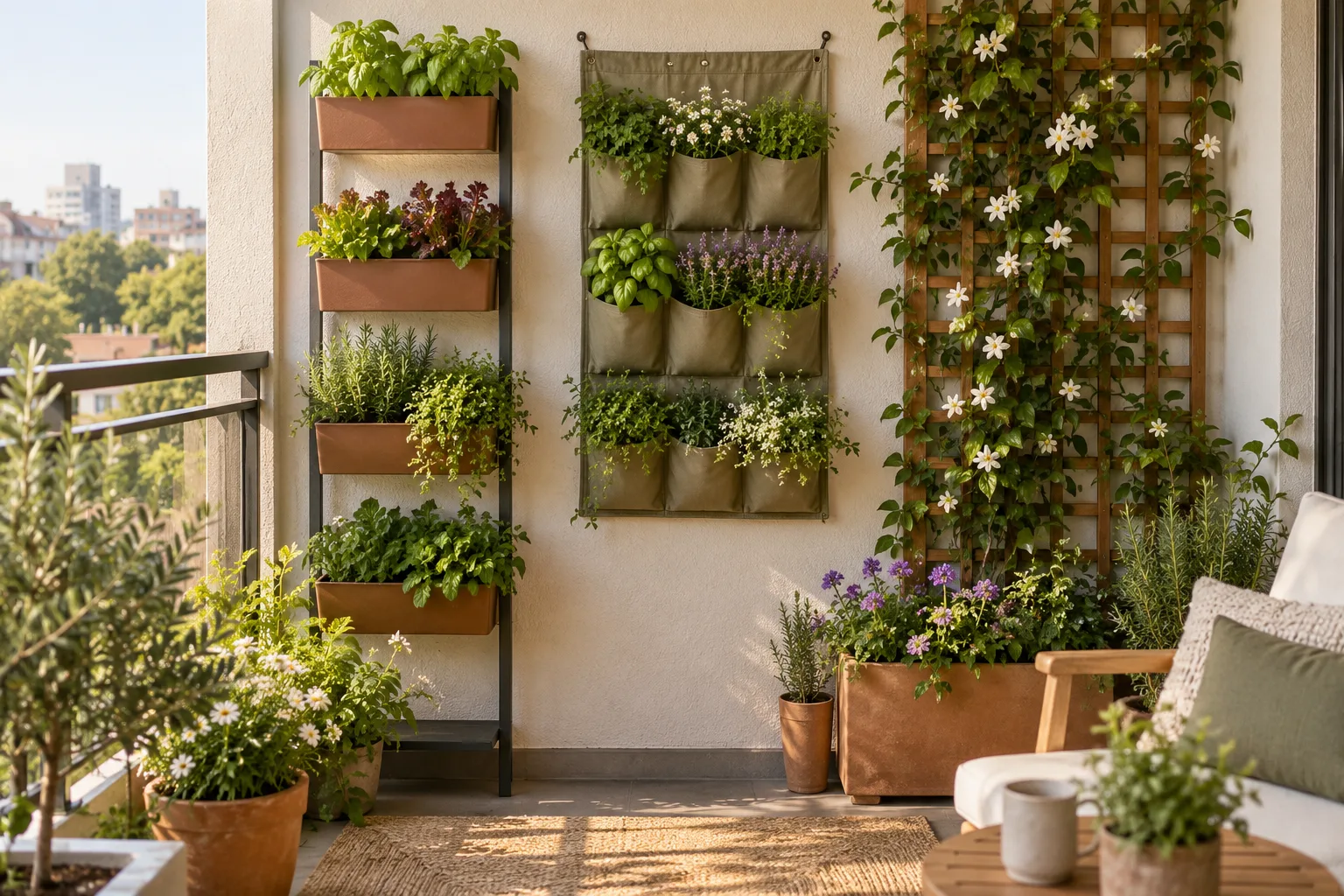
    Group plants by light and watering needs instead of placing a pot in every corner. A slim freestanding shelf can use vertical space without relying on the railing. Keep the shelf stable, follow its placement and loading instructions, and leave room to water and clean behind it.

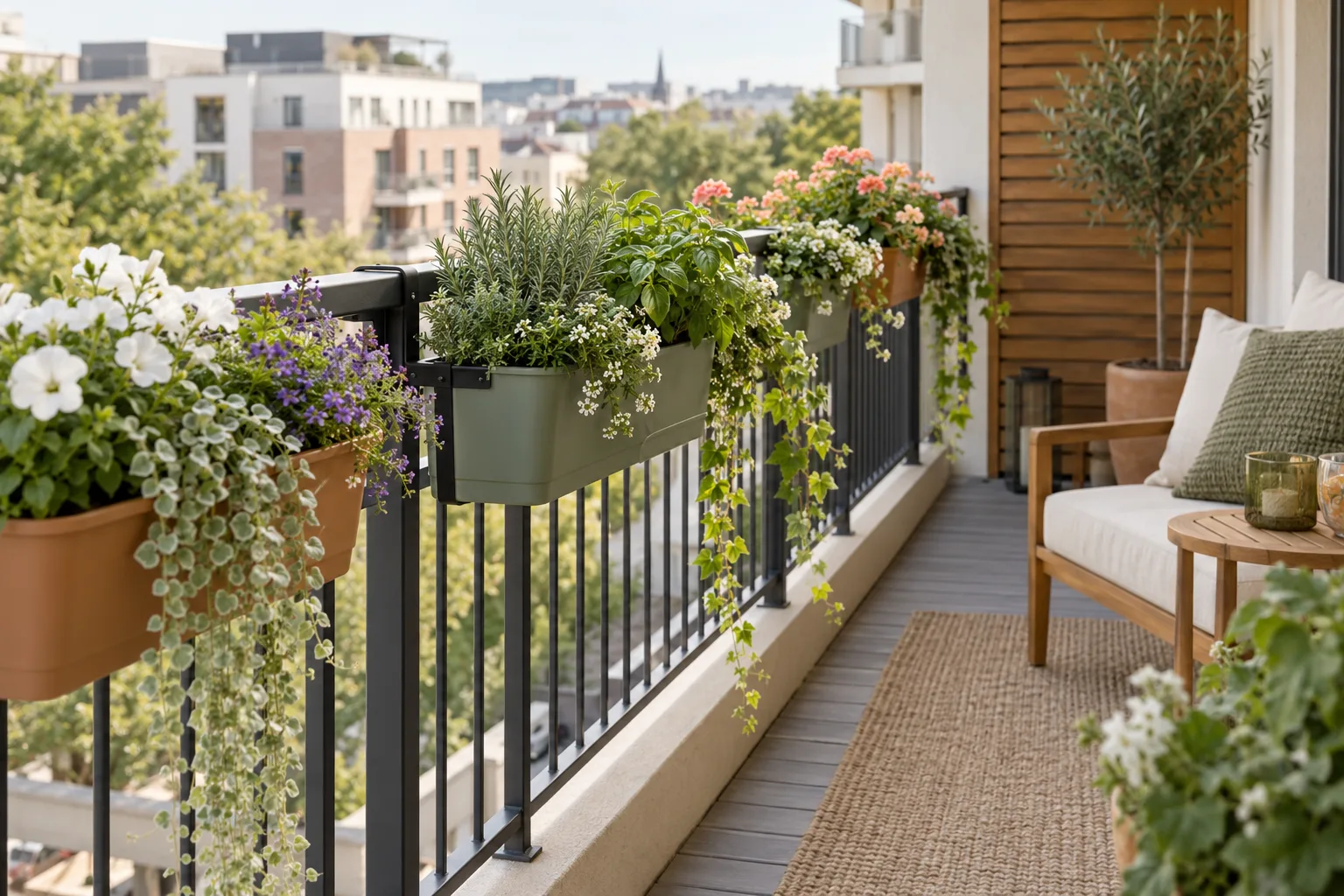
    Railing planters are not automatically appropriate for every balcony. Use only attachments designed for the specific railing and permitted by the building, lease, or association. Never improvise fasteners or place objects where they could fall.

    Compare freestanding, wall-supported, pocket, and tiered formats in Best Vertical Planters for Balconies and Small Patios.

    6. Add privacy without turning the balcony into a wall

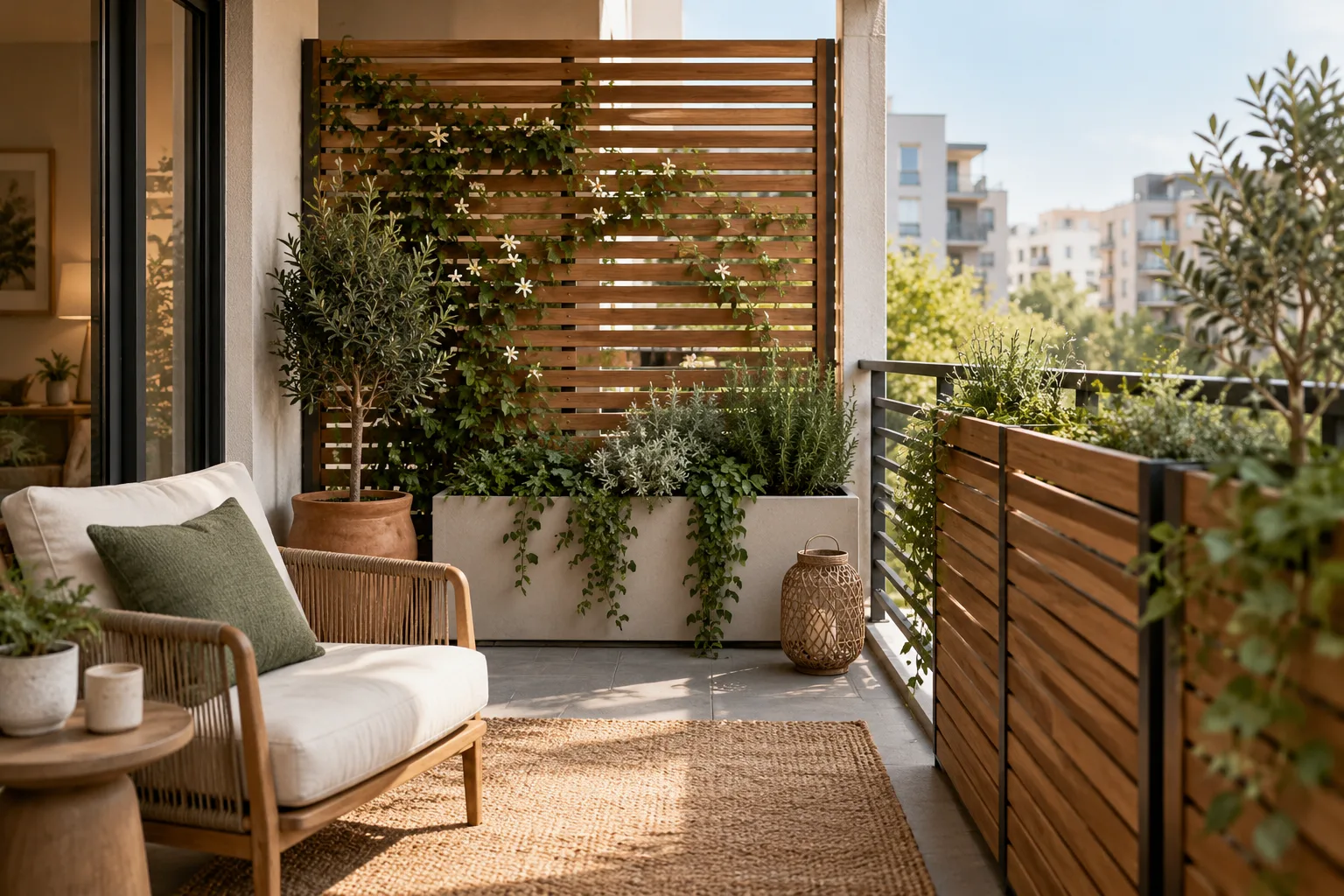
    Place privacy where it is needed most—often one side facing a neighboring balcony or a lower section facing a walkway. A partial screen can preserve light and airflow while reducing direct sightlines.

    Use freestanding or properly approved systems only. Wind loads, attachment permissions, fire rules, railing function, and maximum permitted height vary by property. Our privacy screen guide explains the main formats and tradeoffs.

    7. Repeat a small color palette

    Choose one base color, one natural material, and one accent. For example, charcoal metal, warm wood tones, and muted green textiles. Repetition creates cohesion without adding objects. Use the same planter finish twice rather than collecting many unrelated containers.

    This principle also makes photographs stronger: one clear seating vignette, one planted vertical edge, and open floor produce more useful future pin compositions than decoration distributed evenly around the balcony.

    8. Light the activity, not every corner

    A compact rechargeable outdoor lamp can provide task light without adding permanent wiring. Outdoor-rated string lights or wall fixtures should be used only with suitable supports, permitted installation, and manufacturer instructions. Keep cords and connections out of the route and protected as directed.

    Avoid relying on candles where building or fire rules restrict open flames. Battery-operated lights can create a similar glow with fewer placement complications.

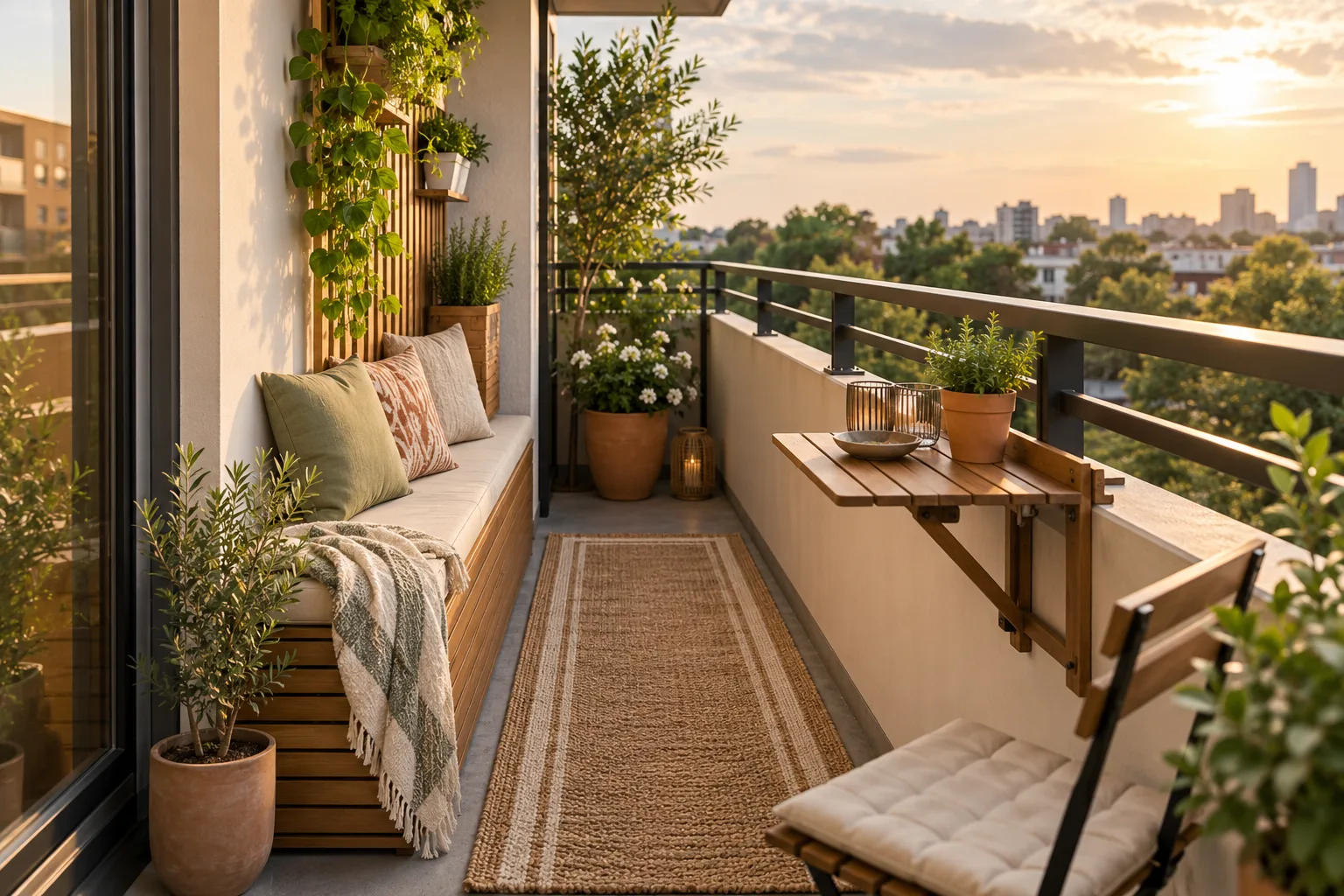
    Narrow apartment balcony makeover with open walking space.

    9. Give every loose item a home

    Keep watering tools, clips, cushions, and cleaning supplies from becoming permanent floor clutter. A small indoor basket may be more practical than adding outdoor storage furniture. If a bench or box is necessary, confirm that it fits the route and opens completely.

    Do not store temperature-sensitive, hazardous, valuable, or moisture-sensitive items outside unless the container and conditions are specifically appropriate.

    A renter-friendly makeover order

    1. Check the lease, building handbook, and association rules.
    2. Empty and clean the balcony without blocking drains.
    3. Mark the door, required route, and permanent obstacles.
    4. Return the minimum seating for one primary activity.
    5. Add one shared surface and test movement.
    6. Group plants in one stable, maintainable zone.
    7. Add permitted privacy only where sightlines require it.
    8. Finish with one lighting layer and a restrained color accent.
    9. Photograph the view from indoors and remove visual clutter.

    For related editing principles that also work at ground level, see Small Patio Makeover Ideas That Don’t Feel Crowded.

    The takeaway

    A balcony feels larger when the purpose is obvious and the route is effortless. Build one furniture group, concentrate plants and privacy where they solve real problems, and leave visible floor between the door and seating. The makeover succeeds when the balcony is easier to enter, maintain, and use.