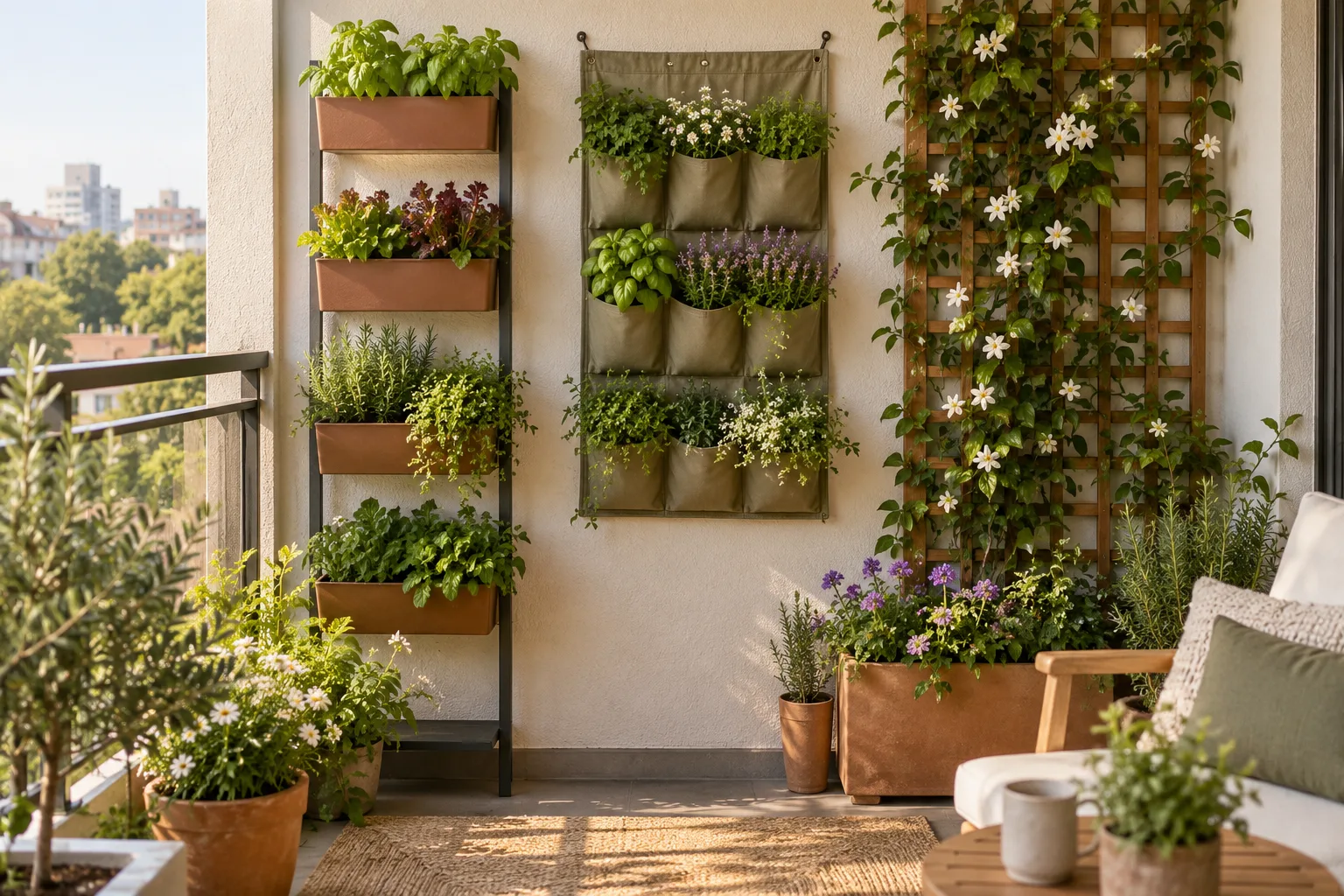
The best vertical planter for a balcony or small patio concentrates plants without making watering, pruning, drainage, or movement harder. A narrow footprint helps only when the structure is stable, the upper plants are reachable, and water does not create problems below.
Begin with the location and plants, not the number of pockets or shelves. Measure the available width, depth, and height; note sun, wind, wall access, drains, and the route from the door; then choose a format suited to the property rules and your maintenance routine.
Decision factors for a small-space planter
- Footprint: exterior width and depth, including feet or stabilizers.
- Height and reach: can every planting level be watered and pruned safely?
- Mounting: freestanding, wall-supported, hanging, or railing-compatible?
- Loaded weight: structure, containers, wet growing medium, mature plants, and water.
- Drainage: where does excess water go?
- Exposure: sun, shade, reflected heat, wind, and seasonal conditions.
- Plant access: enough room for growth without blocking the route or railing.
- Maintenance: cleaning, refilling, repotting, and seasonal storage.
Balcony permissions and limits vary. Do not assume that a wall, railing, ceiling, or floor can accept a planter or its loaded weight. Confirm building, landlord, association, lease, and local requirements, and follow the specific product’s mounting, loading, and wind instructions.
Vertical planter types compared
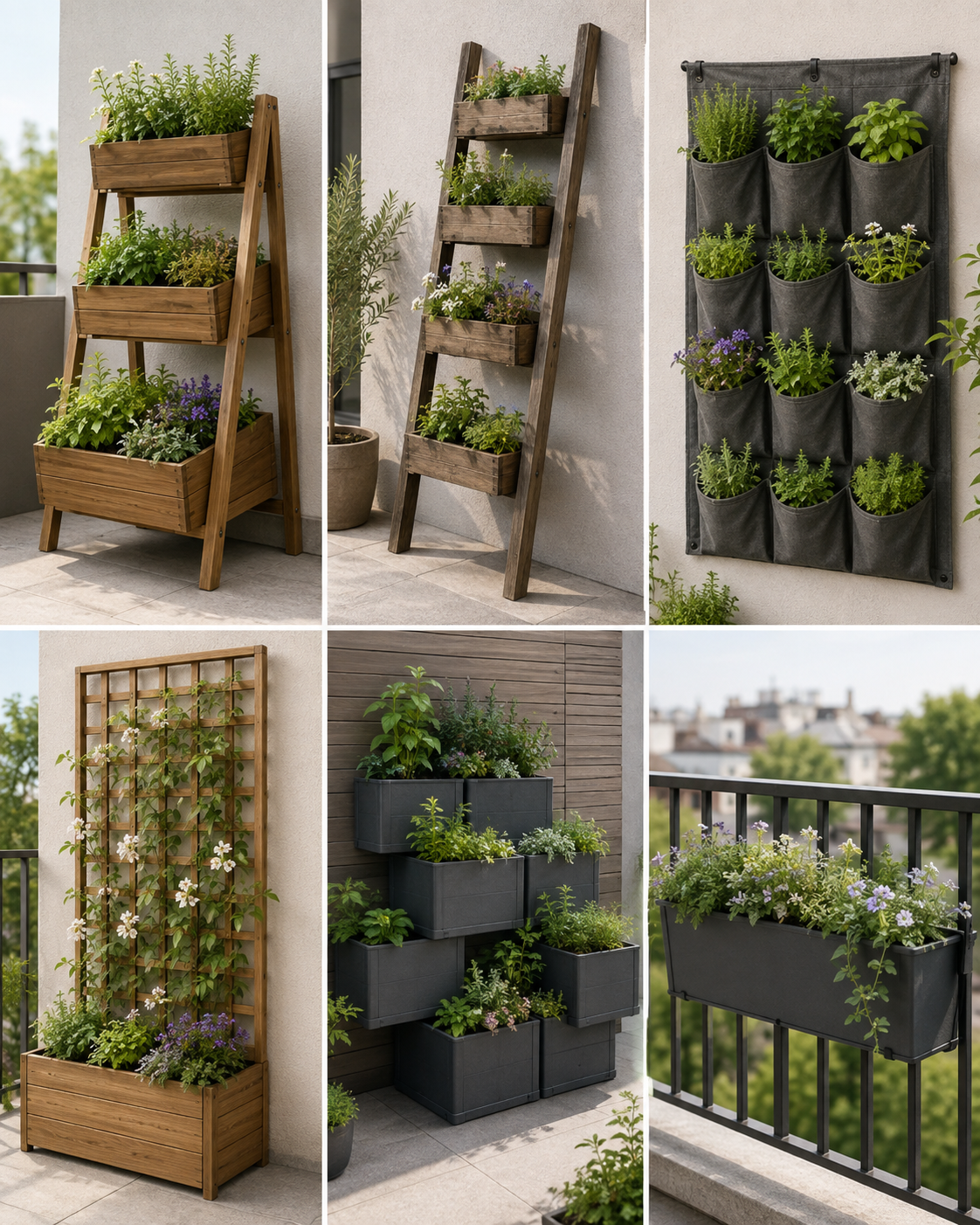
| Planter type | Best suited for | Space advantage | Main tradeoff |
|---|---|---|---|
| Freestanding tiered planter | Renters and flexible layouts | No wall attachment | Base depth and stability |
| Ladder-style shelf | Individual removable pots | Uses height while keeping plants accessible | Needs suitable support or stable freestanding design |
| Pocket planter | Lightweight plant groupings where approved | Very shallow profile | Mounting, moisture, and uneven watering |
| Planter with trellis | Climbers and targeted privacy | Combines container and support | Loaded weight, wind, and mature growth |
| Stacked modular planter | Compact herb or flower groupings | Multiple planting levels in one base | Water distribution and access |
| Railing-compatible planter | Approved railings only | May preserve floor space | Compatibility, attachment, and fall risk |
Best renter-friendly option: freestanding tiered planters
A freestanding tiered planter avoids permanent wall attachment and can move as light conditions change. It suits herbs, flowers, or compact foliage when each tier remains accessible. The structure still needs a stable base and placement appropriate to wind and the loaded weight.
Check the total assembled dimensions and spacing between tiers. Tall plants on a lower level may crowd the shelf above, while a wide upper container can shade lower plants. Confirm how drainage moves from one level to the next.
Best for removable pots: ladder-style shelves
A ladder-style plant shelf keeps pots separate, making it easier to rotate, repot, or bring individual plants indoors. Freestanding models should be designed to stand safely without improvised support. Leaning models require a suitable surface and any permission or attachment specified by the manufacturer.
Place heavier pots only where the product directs and stay within stated limits. Keep shelves away from required exits and railings where they could create a climbing hazard.
Pocket planters: shallow but maintenance-heavy
Pocket systems can create a large planted surface with little projection, but they put moisture close to the mounting surface. Watering may be uneven, upper pockets can dry differently from lower pockets, and mature roots may have limited volume.
Use only with an approved mounting system and a surface protected as the manufacturer directs. Plan how to capture drainage, inspect behind the planter, and remove the system for maintenance.
Planters with trellises: planting plus partial privacy
A planter-and-trellis combination supports climbing plants and can interrupt a specific sightline. It is often deeper and heavier than a shelf or pocket system, especially after watering and mature growth. Wind exposure also increases as foliage fills the trellis.
Choose plants for actual conditions and confirm how the trellis is stabilized. For non-plant privacy alternatives, compare the formats in Best Privacy Screens for Balconies and Small Patios.
Stacked modular planters: compact planting volume
Stacked planters group several planting pockets around one vertical column or base. They can suit compact herbs or flowers when the modules remain stable and each pocket receives appropriate light and water. A top-heavy arrangement or uneven watering can create problems.
Confirm the intended maximum configuration and do not add modules beyond manufacturer guidance. Rotate or reposition only when the loaded planter can be handled safely.
Railing planters require exact compatibility
A railing-compatible planter should be used only on the railing types, dimensions, and locations specified by the manufacturer and permitted by the property. Generic hooks or improvised ties are not substitutes for a compatible attachment system.
Do not obstruct railing function, drainage, inspection, or required exits. Consider the consequences of wind, watering, falling objects, and access below. If suitability is uncertain, choose a stable freestanding planter instead.
Plan watering before planting
Fill the empty system with containers or temporary weights only as the manufacturer permits, then test access with a watering can. Can the highest level be reached without climbing? Can runoff be captured? Can the floor and wall behind the planter be cleaned?
Self-watering reservoirs and drip systems vary by design. Verify capacity, overflow behavior, maintenance, and indoor connection requirements from current product instructions rather than assuming they eliminate routine care.
Match plants to each level
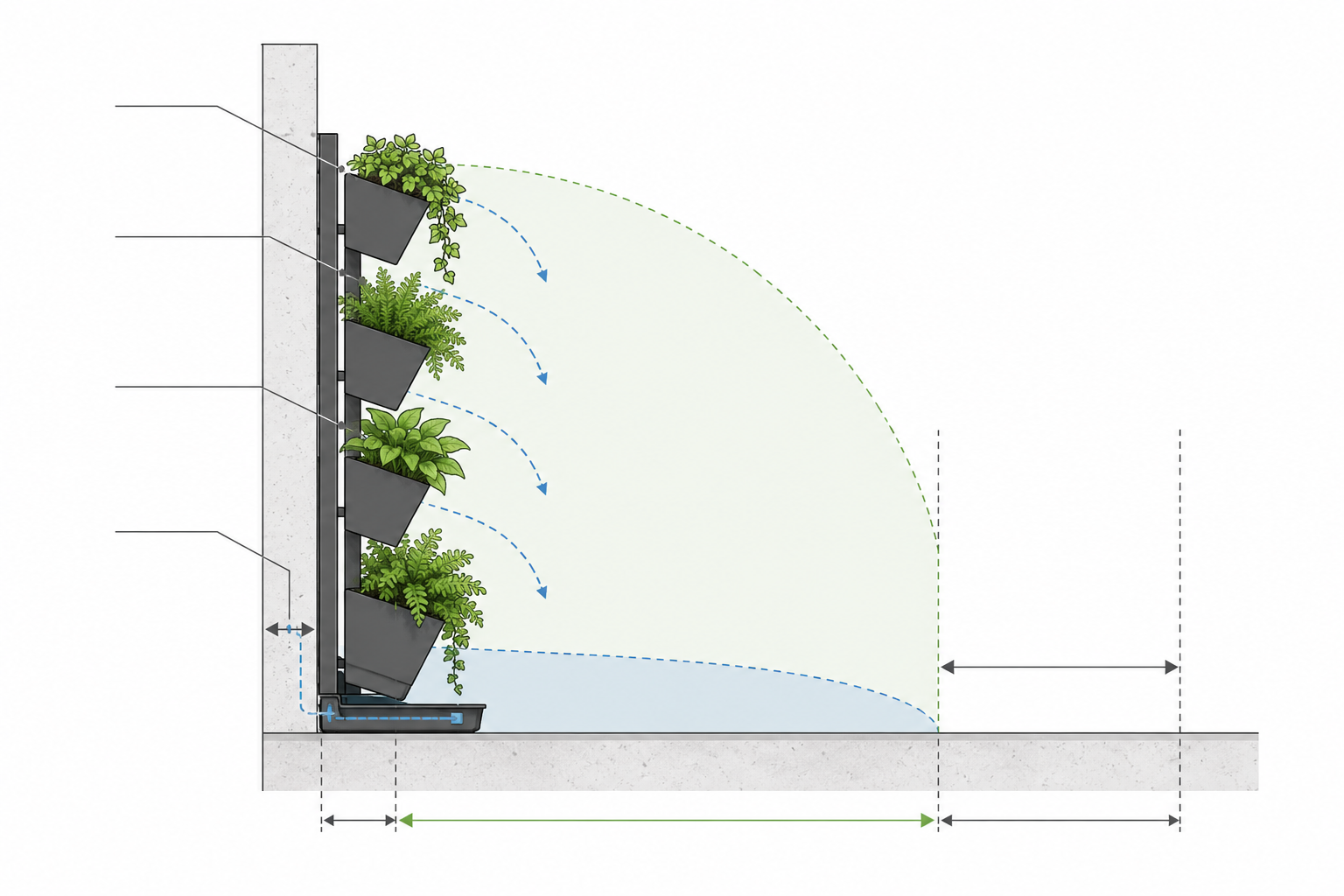
Upper tiers may receive more sun and wind, while lower tiers may be shaded or receive runoff. Observe the location before choosing plants. Group species with compatible moisture needs, allow for mature width and height, and avoid plants that will overtake the route or neighboring property.
Edible gardening introduces additional questions about growing medium, containers, water quality, and plant suitability. Use reliable horticultural guidance appropriate to the crop and region.
Integrate the planter into the layout
Place one vertical planter at the edge of the activity zone rather than adding small pots throughout the floor. It can frame a chair, soften a privacy screen, or create a destination at the end of a narrow yard.
For balcony layout ideas, see Apartment Balcony Makeover Ideas That Still Leave Room to Move. Ground-level readers can use the zoning approach in Small Backyard Ideas for Narrow or Limited Spaces or the editing principles in Small Patio Makeover Ideas That Don’t Feel Crowded.
A vertical-planter buying checklist
- Measure the complete footprint, height, and maintenance access.
- Confirm sun, wind, temperature, wall, and drainage conditions.
- Choose freestanding or approved mounting for the property.
- Review loaded-weight limits and stability instructions.
- Plan how every level will be watered, drained, and cleaned.
- Choose plants for mature size and conditions at each tier.
- Keep the door, required route, railing, drain, and utility access clear.
- Confirm seasonal storage and disassembly requirements.
The takeaway
A vertical planter saves useful space only when it remains stable and maintainable. Favor a freestanding tiered planter or ladder shelf when reversibility matters, and use attached or railing-compatible systems only with exact product compatibility and property permission. Plan watering, mature growth, and access before counting planting pockets.