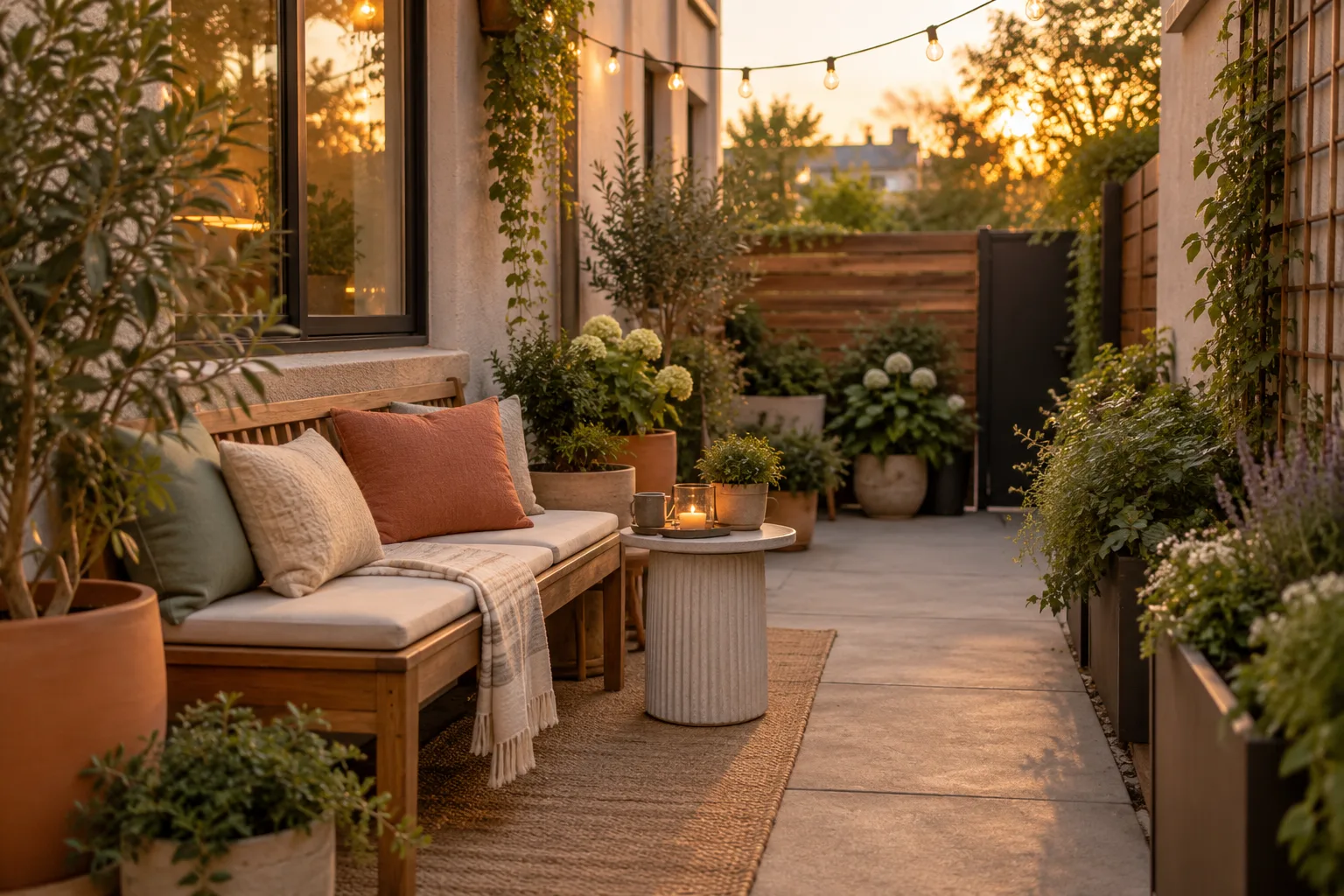
A small patio makeover works best when it improves the space you can use, not just the number of things you can see. Clear movement, comfortable seating, and one strong visual idea will usually make a compact patio feel more finished than layers of furniture and decor.
Start by removing everything that does not need to live outdoors. Then build the space back in this order: layout, seating, useful surfaces, lighting, plants, and finishing details. That sequence keeps decorative purchases from dictating the floor plan.
1. Give the patio one main purpose
Choose the activity the patio should support most often. It might be coffee for two, a quiet reading spot, container gardening, or casual dinners. A clear purpose makes it easier to reject furniture that looks appealing but does not help the space function.
- Conversation patio: face two chairs toward each other with a small shared table.
- Dining patio: center a compact table where chairs can pull out without blocking the door.
- Reading retreat: use one excellent chair, a footrest that tucks away, and a task light.
- Garden-focused patio: keep the middle open and move plants to the perimeter or a vertical support.
If furniture is the first purchase, use the measuring framework in Best Patio Furniture for Small Spaces before choosing a set.
2. Protect the route from the door
The most important line in a small patio is often the route from the home to the seat, gate, stairs, or grill. Keep that path visually obvious. Avoid placing a coffee table directly in the doorway or forcing people to turn sideways around a chair.
For comfortable movement, a main path of roughly 30 to 36 inches can be a useful general planning target when the footprint allows. This is not a universal code or property requirement; actual requirements can vary by property, local rules, and lease or association restrictions. Door operation, required egress, and applicable safety instructions take priority.
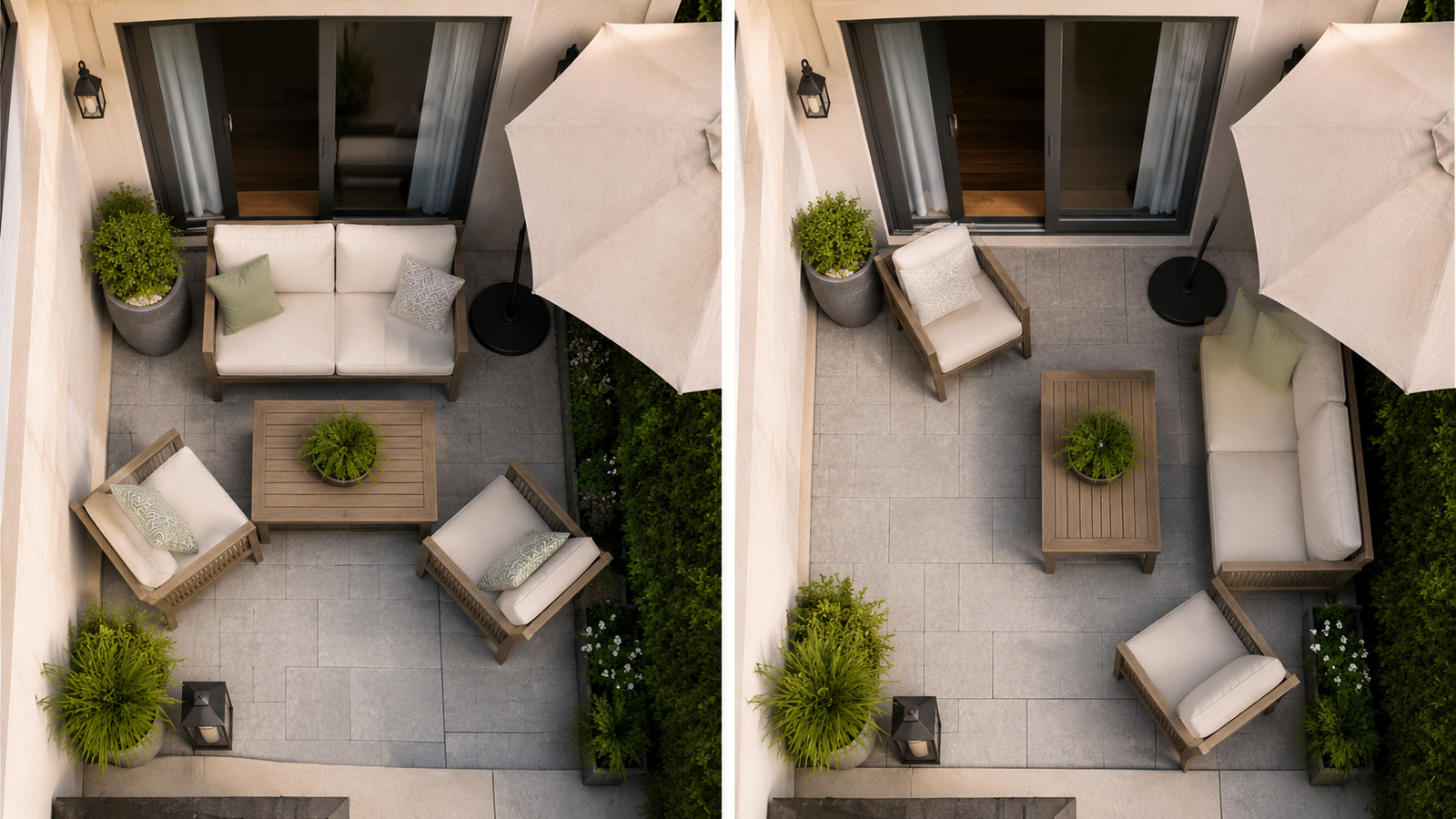
3. Create more floor by using the edges
Move the largest piece toward a wall, railing, or solid boundary when that position is safe and comfortable. A bench against a wall or two chairs tucked into opposite corners can leave a larger open center than furniture floating randomly in the middle.
Do not push furniture against siding that needs ventilation or access. Leave room for cushions to dry, doors to open, and maintenance areas to be reached. On balconies, never attach or lean items in a way that compromises railing safety.
4. Replace several small pieces with one useful piece
Three tiny tables can create more visual noise than one narrow table with enough surface for two drinks and a book. Several plant stands can be replaced by a single tiered shelf if the shelf is stable and suitable for outdoor use. A properly chosen storage bench may replace loose bins and occasional seating.
The key is genuine usefulness. Multi-purpose furniture is not a win if the storage is difficult to access or the seat is uncomfortable. See Best Outdoor Storage Benches for Small Patios for a practical fit checklist.
5. Use a restrained color plan
Choose one base color, one natural material, and one accent color. For example: warm gray frames, wood-toned planters, and rust-colored cushions. Repeating those elements makes mixed furniture feel connected without requiring a matching collection.
Light colors can keep large surfaces from feeling heavy, but they are not the only option. A dark chair can work beautifully when the surrounding floor and walls are quiet. Consistency matters more than a rule that every small space must be pale.
6. Add softness without filling the floor
Outdoor cushions, one washable throw, or a compact rug can make a hard-surfaced patio feel comfortable. Keep textiles limited enough that they can be stored or dried easily. A rug should lie flat, suit outdoor exposure, and avoid trapping persistent moisture against the surface below.
If a rug would complicate drainage or maintenance, skip it. Repeating cushion colors and adding a single larger planter can create the same sense of cohesion while leaving the floor easier to clean.
7. Move planting upward—but keep it maintainable
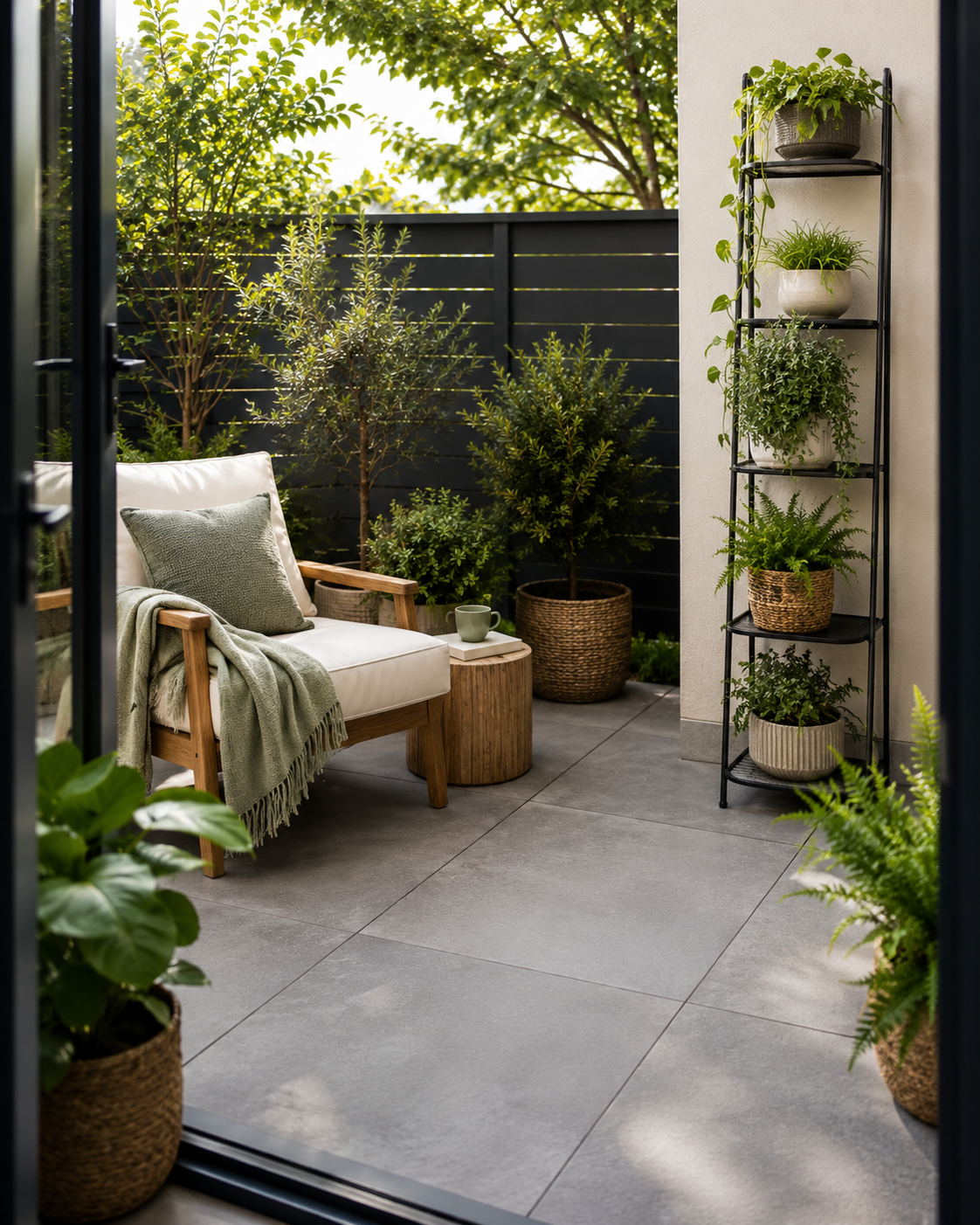
Vertical planting can free floor area when the support is appropriate for the location. Consider a slim freestanding ladder planter, railing-safe planters approved for that use, or wall-mounted containers installed with permission. Match plants to the patio’s actual sun, wind, and watering conditions.
Leave enough space to water, prune, and clean behind every container. A living wall that is hard to reach quickly becomes a maintenance problem. Grouping a few pots by light and watering needs is often more practical than scattering many individual containers.
8. Layer lighting above the floor
Use light to define the seating area without adding another large object. Options may include a wall-mounted fixture installed by a qualified person, outdoor-rated string lights attached to appropriate supports, or a compact rechargeable table lamp that can be brought inside.
Use only products rated for their intended outdoor location and follow installation instructions. Keep cords out of walking paths, protect connections as directed by the manufacturer, and follow lease or association rules.
9. Make one corner the visual anchor
A patio feels calmer when the eye has somewhere to land. Create one focal area with a handsome chair and planter, a small dining table beneath a light, or a bench backed by a simple screen. Let the other corners stay quieter.
This is especially useful for Pinterest-friendly styling: one strong composition photographs better than decorations spread evenly around the perimeter. It also makes seasonal updates easier because the base layout can stay in place.
10. Try a renter-friendly surface refresh
Clean the existing surface thoroughly before covering it. If permitted, outdoor-rated deck tiles can visually define a zone, but they must be compatible with the substrate, drainage, door clearance, and lease terms. Never cover damage or create a trip edge.
Lower-commitment alternatives include a suitable outdoor rug, coordinated planters, or a narrow doormat that does not interfere with the door. Renters should get written approval before drilling, painting, or installing anything attached to the building.
A one-afternoon makeover order
- Empty the patio and clean the floor, railing, walls, and furniture.
- Mark the door swing and main walking path with painter’s tape.
- Return only the seating needed for the patio’s primary activity.
- Add one right-sized surface for drinks, meals, or gardening.
- Group plants at the edge according to light and watering needs.
- Add one lighting layer and one restrained textile or color accent.
- Photograph the layout from the doorway and remove anything that interrupts the view or path.
For a square patio, compare these ideas with the measured layouts in How to Arrange Furniture on a 10×10 Patio.
The takeaway
The most effective small patio makeover is usually an edit, not an accumulation. Establish one purpose, keep the route clear, use the edges intelligently, and concentrate color and planting in a few deliberate places. The result feels inviting because there is room to use it.