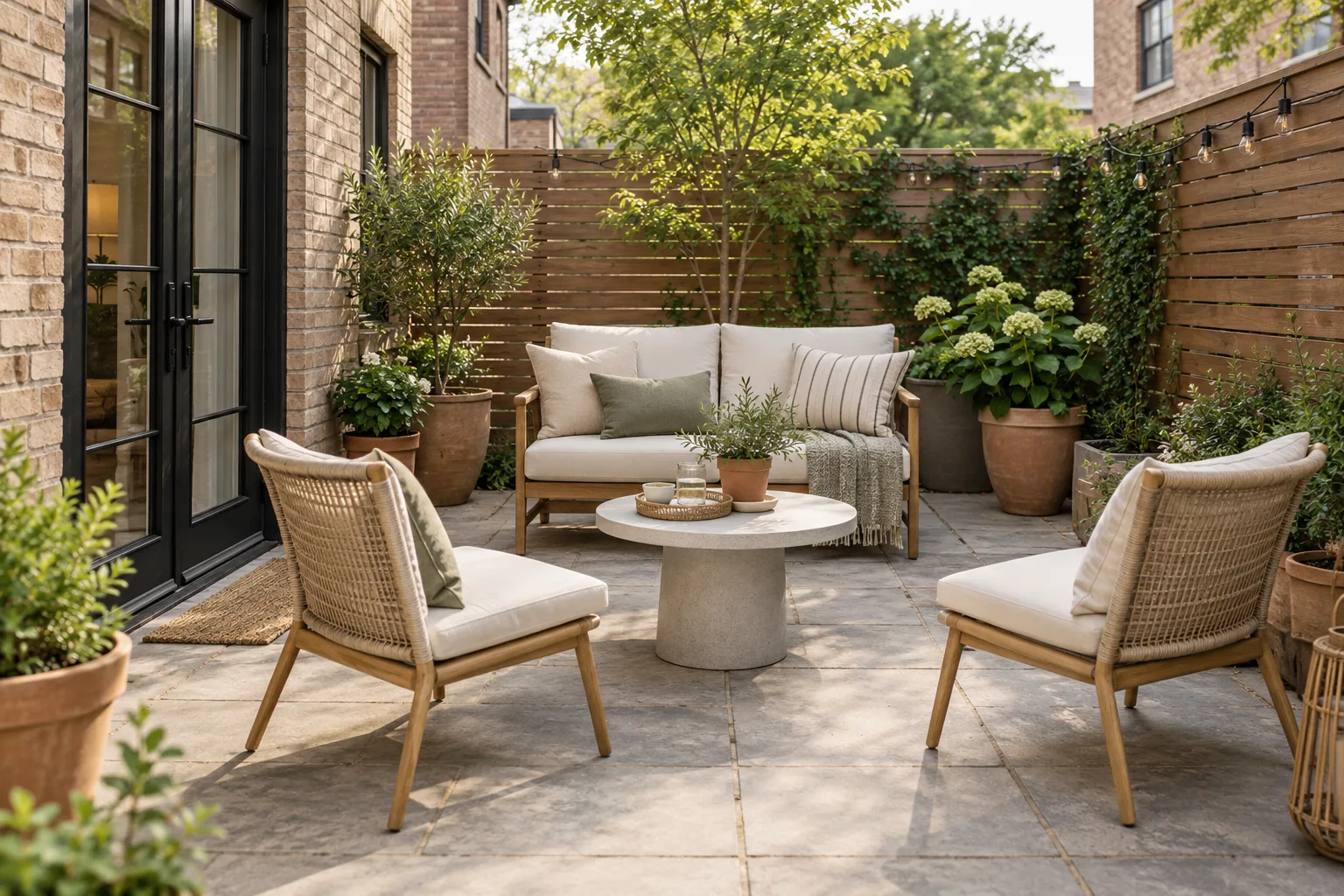
The best patio furniture for a small space is not simply the smallest set on the sales floor. It is furniture that supports how you actually use the patio while leaving enough open floor for doors, walkways, and everyday movement.
For most compact patios, the strongest starting points are an armless loveseat with a narrow table, a two-chair bistro set, a pair of lounge chairs with a shared side table, or flexible folding pieces. The right choice depends on whether your priority is dining, conversation, reading, or occasional extra seating.
Start with the activity, not the furniture set
Before measuring products, choose the main job for the space. A 6-by-8-foot patio used for morning coffee needs a different layout than the same patio used for outdoor dinners. Trying to support every activity at once usually creates clutter.
- For coffee and conversation: two comfortable chairs and a small table.
- For regular meals: a compact dining table with chairs that tuck fully underneath.
- For lounging: a shallow loveseat or two lounge chairs, plus one movable surface.
- For flexible use: folding chairs, nesting tables, or lightweight pieces that can be rearranged.
- For storage-starved patios: a bench or side table that provides genuinely usable storage without blocking access.
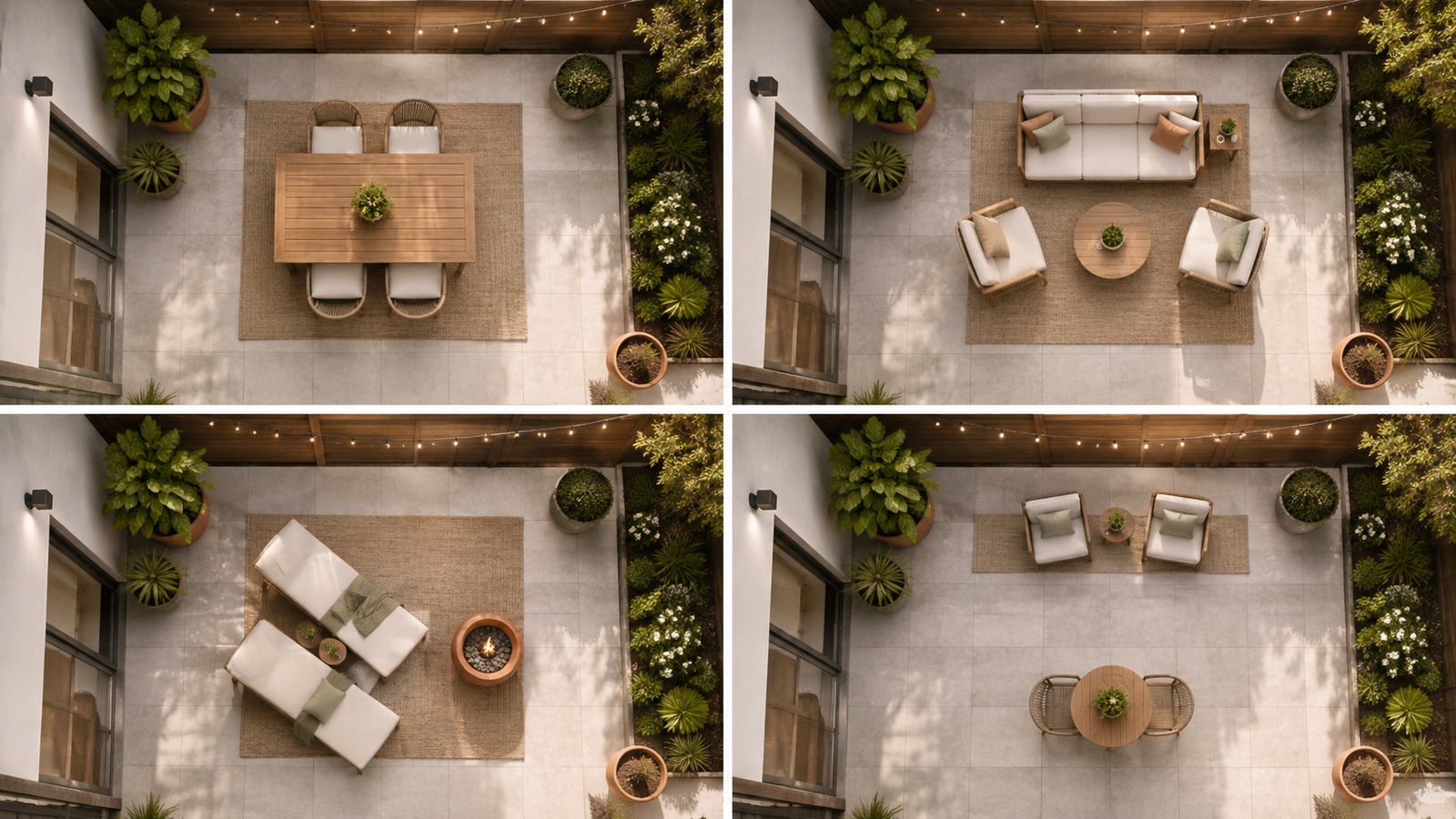
Quick comparison: furniture types for compact patios
| Furniture type | Best for | Space-saving advantage | Watch for |
|---|---|---|---|
| Two-chair bistro set | Coffee, reading, light meals | Small footprint; easy to position | Chair pull-out room |
| Armless loveseat | Relaxing with one other person | More seating per linear foot | Deep seats can consume floor space |
| Two lounge chairs | Conversation and flexible seating | Can be angled or separated | Wide arms add bulk |
| Backless bench | Occasional seating | Can tuck below a window or rail | Less comfortable for long sessions |
| Folding table and chairs | Multi-use patios | Floor can be cleared when needed | Requires a place to store folded pieces |
| Nesting tables | Drinks, books, and serving | Extra surfaces occupy one footprint | Check stability on uneven paving |
This post may contain affiliate links. If you buy through them, Small Space Outdoors may earn a commission at no additional cost to you.
Current product examples to compare
These are current examples for three different small-patio priorities, not ranked picks. Small Space Outdoors has not personally tested them. Use the article’s measuring steps first, then confirm the current listing, total dimensions, assembly, care instructions, and delivery details before ordering.
For a patio that needs to change jobs: Grand patio 3-Piece Folding Patio Bistro Set
This example matches a dining-first or flexible layout. Amazon lists it as a three-piece set with two chairs and a round table, and the chairs and table fold. That makes it relevant when the floor needs to be cleared between meals, but you still need an appropriate place to store the folded pieces.
View the Grand patio 3-Piece Folding Patio Bistro Set on Amazon.
For two everyday seats and one useful surface: Best Choice Products 3-Piece Outdoor Wicker Conversation Bistro Set
This conversation-focused option uses two separate chairs and one accent table rather than a loveseat and coffee table. The current Amazon listing identifies a storage compartment in the side table, which may help the table earn its footprint. Confirm chair depth, cushion-storage plans, and access to the table compartment in your taped layout.
View the Best Choice Products 3-Piece Outdoor Wicker Conversation Bistro Set on Amazon.
For flexible surfaces without replacing the seating: Meluvici Outdoor Patio Coffee Table Set of 2
This example fits a patio that already has suitable seating but needs surfaces that can move with the layout. Amazon lists two round tables sold as a nesting set. They can be positioned for separate seats or grouped when fewer surfaces are needed; verify the current dimensions and how the two tables fit together before counting on a particular stored footprint.
View the Meluvici Outdoor Patio Coffee Table Set of 2 on Amazon.
Measure the usable rectangle
Measure the patio itself, then subtract the areas that furniture cannot occupy. Include the full swing of hinged doors, the track area around sliders, stairs, gates, utility panels, grill safety zones, planters, and any path that must remain open.
For comfortable movement, a main walking path of roughly 30 to 36 inches can be a useful general planning target where the space allows. A secondary path can sometimes be tighter, but it should still feel natural to use. Dining chairs also need room to pull back. This is not a universal code or property requirement; actual requirements can vary by property, local rules, and lease or association restrictions. Required egress, door operation, and applicable safety instructions always take priority.
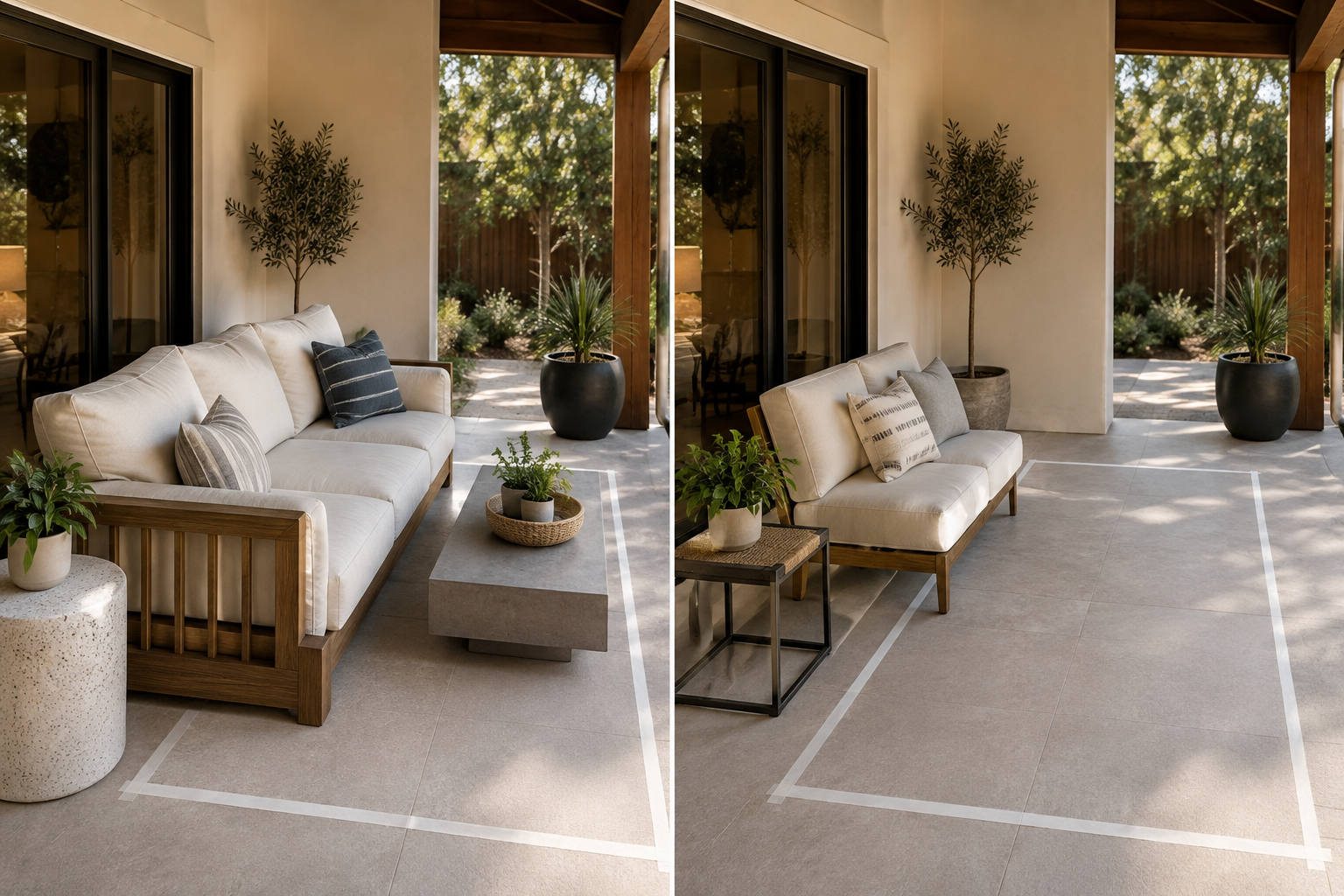
Use painter’s tape to outline each proposed piece on the floor. Then open the door, carry a tray through the space, pull out every chair, and sit down. This simple test catches crowded layouts before a delivery arrives.
Choose dimensions that reduce visual and physical bulk
Seat depth
Deep lounge furniture can be comfortable, but it often has the largest effect on traffic flow. Compare the product’s total depth—not only the cushion depth—and include the space needed to approach and sit. A shallower seat may create more usable open floor without sacrificing the number of seats.
Arm style
Armless chairs and loveseats use their width efficiently and create cleaner sightlines. Slim open arms can provide support without the visual weight of thick upholstered or molded sides. If you prefer wide arms for comfort, reduce the number of other pieces rather than forcing a complete matching set into the layout.
Table shape
Round tables remove sharp corners from tight circulation zones. Square tables can sit neatly against a wall, while drop-leaf designs expand only when needed. Pedestal bases may provide more legroom, but stability matters—especially on a windy balcony or uneven patio.
If a three-piece set fits your use case, see Best 3-Piece Patio Sets for Small Spaces for configuration-specific guidance.
Furniture materials: choose for exposure and upkeep
No material is maintenance-free in every climate. Powder-coated metal can offer slim frames but may chip or corrode if its finish is damaged. Wood brings warmth but usually requires periodic care. Woven synthetic materials can soften the look of a patio, though bulky frames and deep cushions may take up more room. Molded resin is often easy to move and clean, but quality and stability vary by construction.
Evaluate the specific product instructions for cleaning, storage, wind exposure, weight limits, and weather protection. If cushions stay outdoors, plan where they will go during storms or the off-season before buying them.
Storage furniture should earn its footprint
A storage bench is useful only if the lid can open in its planned location and the interior suits what you need to store. Leave room behind or above the lid, check whether the contents need a separate weatherproof container, and avoid storing items that should not be exposed to outdoor temperature or humidity swings.
For a closer look at access, ventilation, seating comfort, and placement, read Best Outdoor Storage Benches for Small Patios.
Avoid the matching-set trap
Small patios rarely need every piece included in a large coordinated collection. A loveseat, two chairs, coffee table, side table, and ottomans may look balanced in a catalog but leave no breathing room at home. It is often better to combine two or three pieces with similar color, scale, or material than to buy a complete set that dictates the layout.
Keep one area of floor visibly open. That negative space makes the patio easier to navigate and helps individual pieces read as intentional rather than crowded. Our small patio makeover ideas show how lighting, planting, and color can add personality without adding more furniture.
A practical buying checklist
- Write down the patio’s usable width and depth after door swings and permanent obstacles.
- Choose one primary activity and the minimum number of seats needed most days.
- Record maximum furniture dimensions, not just preferred dimensions.
- Map the layout with tape and test walking, sitting, and door operation.
- Check total product dimensions, weight, assembly requirements, care instructions, and storage needs.
- Confirm that chairs can pull out and that lids, drawers, and folding parts can operate fully.
- Decide where cushions and lightweight pieces will go during severe weather.
- Measure the delivery route, including gates, stairs, elevators, and doorways.
The takeaway
For a small patio, buy fewer pieces with clearer jobs. Start with the usable floor area, protect the walking path, and compare total dimensions before style details. Furniture that can move, fold, nest, or serve two sensible functions gives a compact outdoor space more options without making it feel busy.
Working with a square footprint? Use the layout examples in How to Arrange Furniture on a 10×10 Patio before committing to a set.