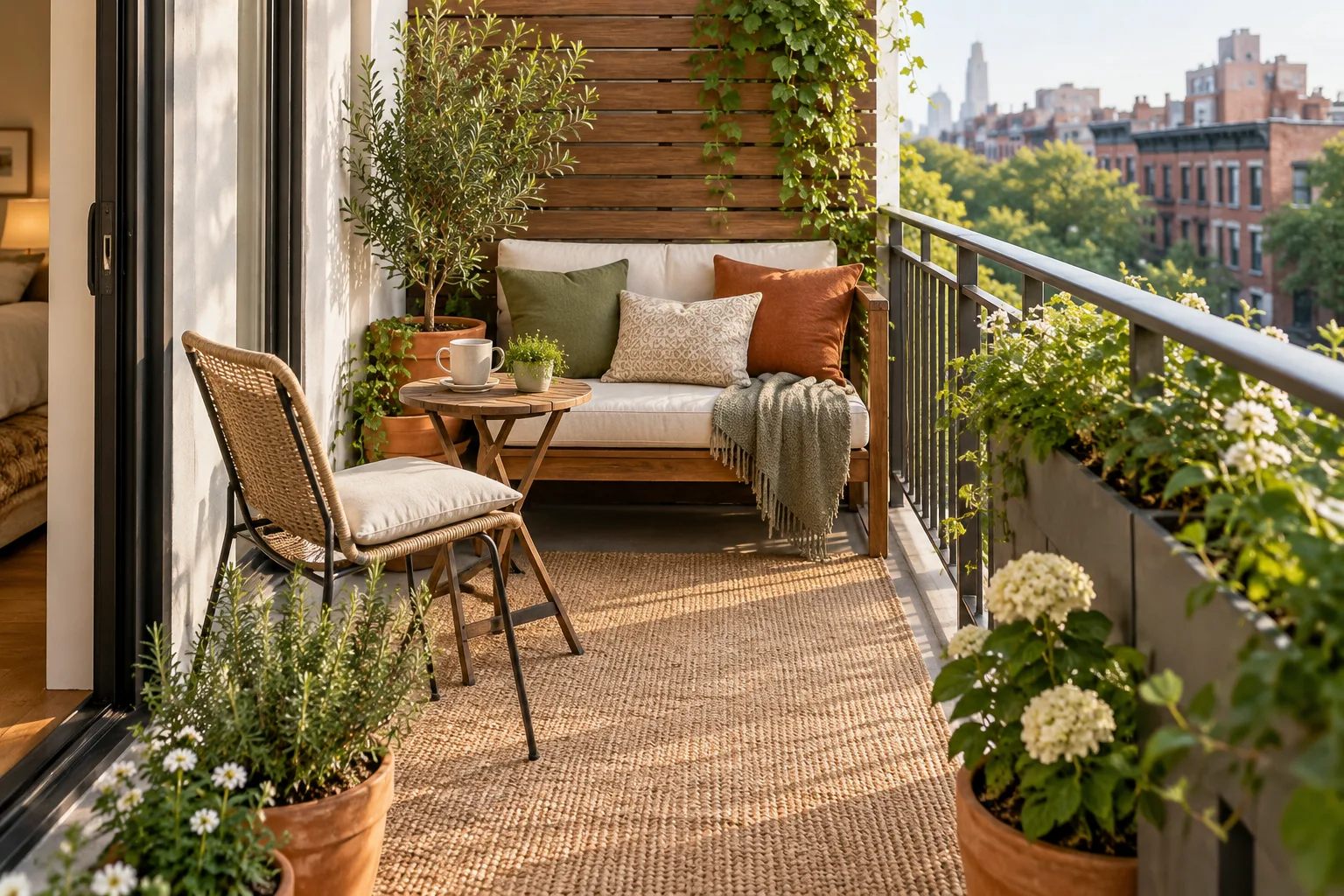
The best balcony furniture for a small space supports one clear activity without turning the route from the door into an obstacle course. Start with the usable floor area, the number of everyday users, and the building rules—not with a matching set.
For many compact balconies, the strongest options are a folding bistro set, two upright chairs with a narrow shared table, one comfortable chair with a movable surface, or a slim bench approved for the location. The right choice depends on whether the priority is meals, conversation, reading, gardening, or flexible open floor.
Begin with the balcony’s fixed limits
Measure the clear floor dimensions, then mark the parts furniture cannot occupy: the full door swing, required exit route, drains, utility access, railings, and any area that must remain open under building or lease rules. Measure narrow points in the delivery route as well.
Balcony requirements vary. Do not assume that a railing can carry planters, tables, privacy panels, or hanging furniture. Confirm mounting permissions, weight restrictions, fire rules, and permitted items with the building owner, landlord, association, or other applicable authority. Follow product installation and wind guidance for the specific location.
For comfortable movement, identify a main path and keep it visibly open. A target around 30 to 36 inches can be useful general planning guidance where space allows, but it is not a universal code or property requirement. Actual requirements vary by building, local rules, lease terms, and association restrictions; required egress and door operation take priority.
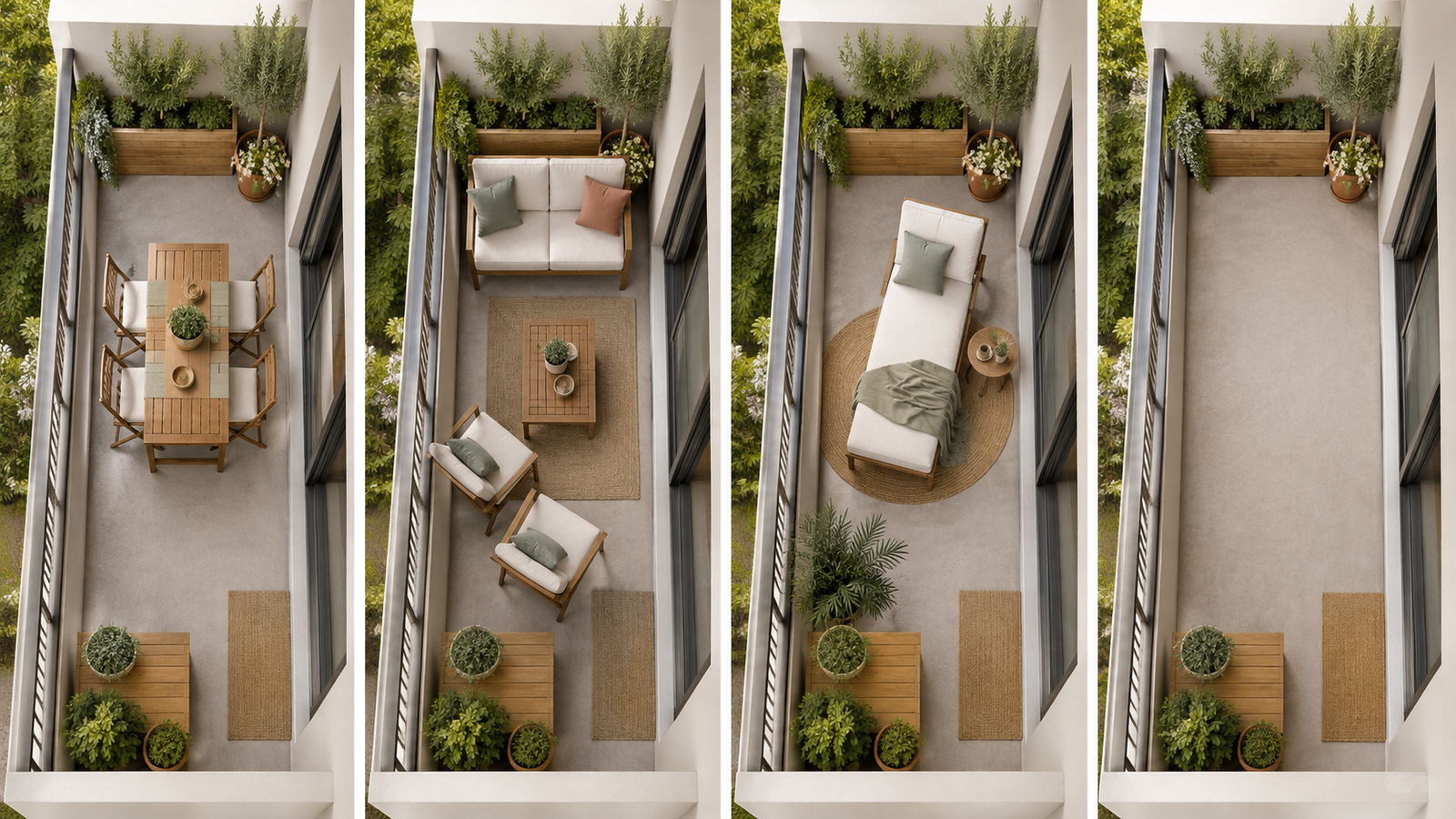
Balcony furniture types compared
| Furniture type | Best suited for | Space advantage | Check before buying |
|---|---|---|---|
| Folding bistro set | Meals and flexible use | Floor can be cleared | Stable locking and folded storage |
| Two upright chairs and side table | Conversation and coffee | Pieces can be repositioned | Total chair depth and arm width |
| One lounge chair and movable table | Solo reading or relaxing | Prioritizes comfort without a full set | Recline and footrest clearance |
| Slim backless bench | Occasional seating | Low visual profile | Approved use, stability, and comfort |
| Nesting table set | Flexible serving surfaces | Extra tables share one footprint | Stability and stored height |
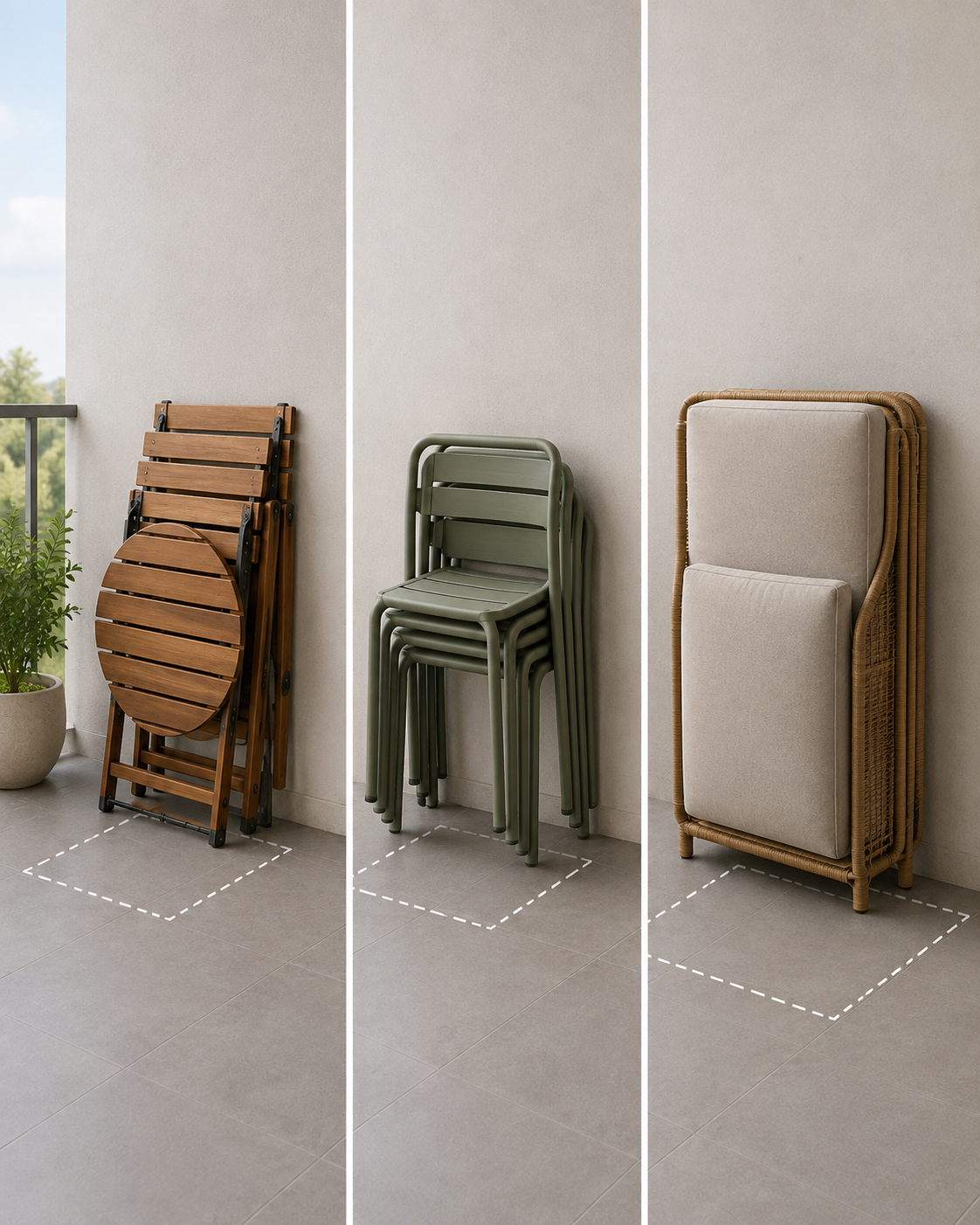
| Stacking chairs | Occasional guests | Consolidated storage | Safe stack height and storage location |
Best for flexible balconies: folding furniture
Folding furniture makes sense when the balcony changes jobs during the week. A table can open for dinner and fold against an approved solid wall afterward, while one chair can stay outside and the other move to storage.
Evaluate the furniture in both states. Confirm that hinges lock securely, folded pieces do not block the door or railing, and there is a suitable storage location. Lightweight construction is convenient to move but requires careful attention to manufacturer wind and storage guidance.
Best for everyday conversation: two compact chairs
Two separate chairs are often easier to fit than a loveseat because they can sit at a slight angle or move independently. Upright backs and moderate seat depth usually preserve more floor than deep lounge silhouettes. Slim or open arms reduce visual bulk.
Place one shared table between the chairs rather than adding a coffee table and two side tables. If a coordinated set appeals to you, use the fit checks in Best 3-Piece Patio Sets for Small Spaces.
Best for one person: a comfortable chair with one surface
A balcony does not have to seat a group. One supportive chair, a small movable table, and an open view can be more useful than multiple compromises. Measure any reclining or rocking movement at its largest position and keep it away from required routes and railings.
An ottoman that tucks beneath the chair or doubles as an occasional surface can add flexibility. Check whether the top is designed to hold items and whether the piece remains stable on the balcony floor.
Tables that waste less space
- Round tops: remove corners from tight circulation areas.
- Square tops: can align with a solid wall when permitted.
- Drop-leaf tables: provide a larger surface only when needed.
- Pedestal bases: may offer flexible leg placement, though stability varies.
- Nesting tables: add temporary surfaces without permanent extra footprints.
Wall-mounted or railing-mounted tables require more caution than freestanding furniture. Use them only where the specific product, mounting surface, building rules, and installation method all permit it. Never improvise attachments or obstruct the railing’s intended function.
Materials and maintenance
Choose materials for the actual exposure rather than the indoor view. Sun, wind, rain, salt air, and temperature swings affect finishes differently. Powder-coated metal can create slim frames, wood brings warmth but often needs ongoing care, synthetic woven materials soften the appearance, and molded resin may be easy to move and clean. Performance depends on the specific construction and care instructions.
Plan where cushions and lightweight pieces will go during severe weather or the off-season. A product that must be moved frequently should fit through the doorway without awkward lifting.
Storage furniture needs a second look
A bench or deck box earns its floor area only when it replaces clutter or another seat. Confirm that it is intended for seating if people will sit on it, and leave room for the lid or doors to open. Weather-protection claims and load limits must come from the manufacturer, not assumptions based on appearance.
The outdoor storage bench guide explains access, ventilation, and material questions that also apply to balconies.
A balcony furniture buying checklist
- Confirm the usable floor area after the door, drain, and required route.
- Choose one primary activity and the everyday number of seats.
- Record maximum width, depth, and operating clearance for every piece.
- Check building, landlord, association, lease, and local restrictions.
- Verify furniture dimensions, intended use, assembly, maintenance, and wind guidance.
- Map the complete layout with tape and operate the door.
- Plan storage for cushions, folding pieces, and lightweight items.
- Measure the route from delivery point to balcony.
For visual changes that do not fill the floor, continue with Apartment Balcony Makeover Ideas That Still Leave Room to Move. If privacy is the priority, review mounting and airflow considerations in Best Privacy Screens for Balconies and Small Patios.
The takeaway
Buy for the balcony in use, not the folded catalog arrangement. Protect the route, choose furniture with clear jobs, and confirm every mounting or building restriction before adding pieces. Two well-scaled seats—or one excellent seat—usually create a more comfortable balcony than a complete set forced into the available floor.