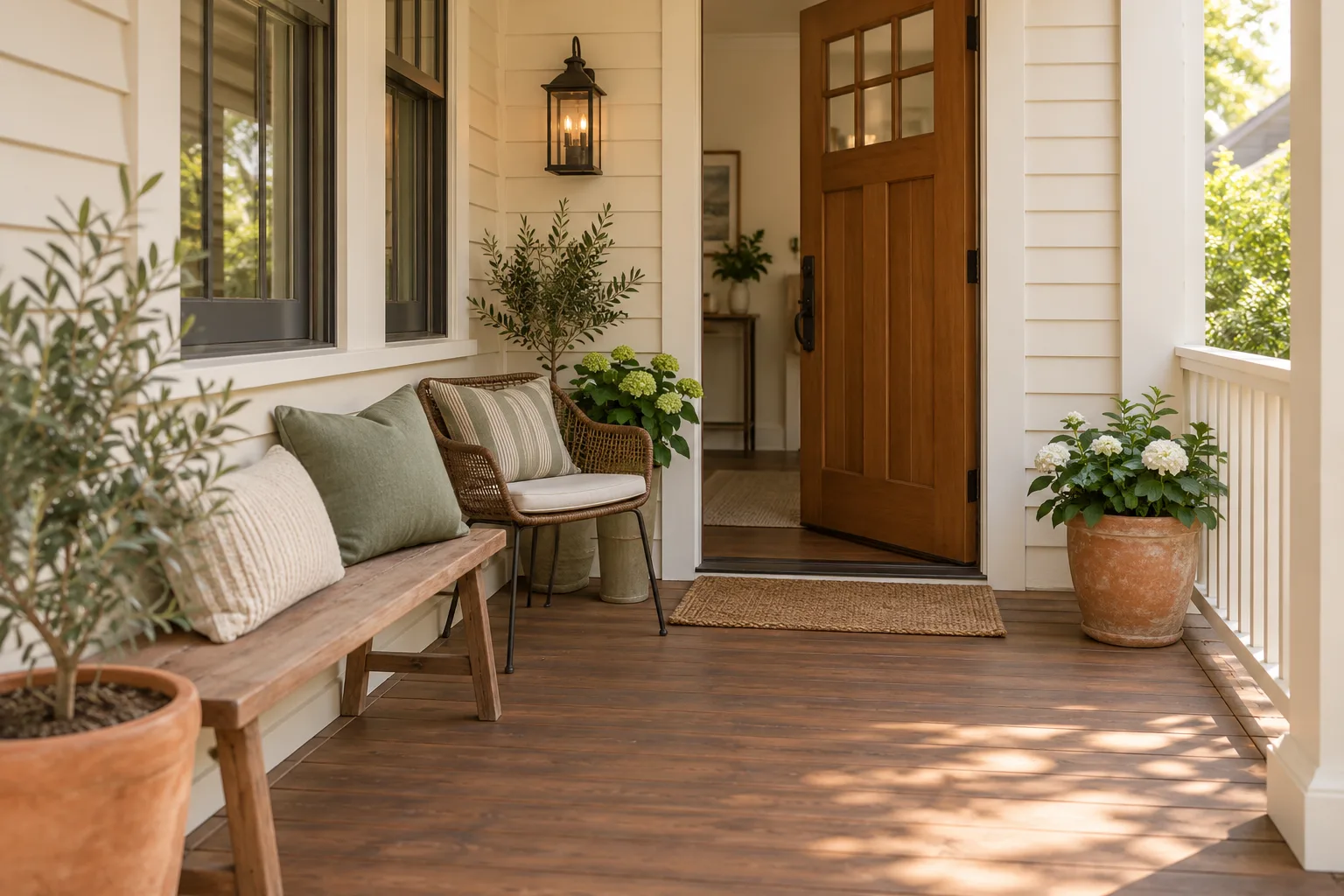
A narrow front porch does not need to imitate an outdoor living room. Its first job is to support arrival: reaching the door, standing while unlocking it, receiving a package, moving past the screen or storm door, and stepping safely between the house and walkway.
Once that sequence works, a small amount of seating, greenery, lighting, and storage can make the porch feel welcoming. The strongest layouts use one clear idea instead of lining every edge with small objects.
Start with the door and arrival sequence
Draw the porch from above and mark the full door swing, including any storm or screen door. Add steps, railings, posts, mailbox, doorbell, utility panels, and the place a visitor naturally stands. Keep required exits and the normal route unobstructed.
Comfortable movement guidance is not a universal code rule. Requirements vary by property, door configuration, local rules, and lease or association restrictions. Verify what applies to the home before adding furniture or attached features.
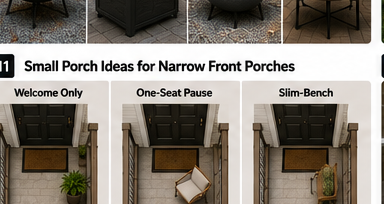
Choose one porch function
| Primary use | Useful elements | What to leave out |
|---|---|---|
| Welcoming entry | Mat, light, house numbers, one planter | Furniture in the standing zone |
| One-person pause | Slim chair, wall-side ledge, task light | Deep table or second chair that blocks the route |
| Package landing | Approved shelf or defined dry floor area | Loose decor that competes for the same space |
| Garden moment | One tall planter or narrow pair | Many small pots across the steps |
| Seasonal accent | One changeable wreath or planter insert | Multiple layers that obscure the door or address |
A narrow porch usually improves when one purpose is dominant. If there is not enough room for a chair that stays outside the door route, let the porch be a well-composed entry instead of forcing seating.
Use a slim chair only where sitting is realistic
An upright armless chair can offer a short pause with less depth than a lounge chair. Place it against a wall or at the wider end of the porch, provided it does not interfere with the door, railing, steps, utilities, or required route.
Test the occupied position, not just the empty chair. Sit down, stand up, and imagine a visitor passing with a bag. If the chair must be moved every time the door opens, it is storage—not functional porch seating.
A narrow bench can work at the closed end
A shallow bench may fit at the end of a long porch when that area is outside the arrival path. Backless designs can reduce visual bulk, while a wall-backed bench may feel more secure. Confirm the finished depth and the space used by seated knees.
Do not block windows, vents, access panels, or railing function. A storage bench adds lid movement and moisture considerations; use the planning questions in Best Outdoor Storage Benches for Small Patios.
Replace a side table with a ledge or stool
A tiny drink surface can make one chair more useful. A compact outdoor stool is flexible and easy to remove. A wall-mounted ledge preserves floor space only when the wall, hardware, property permission, and installation are appropriate.
Keep any surface clear of the lock, doorbell, mailbox, handrail, and package landing zone. Avoid glassware or decor that could fall into the path.
Use vertical detail without narrowing the route
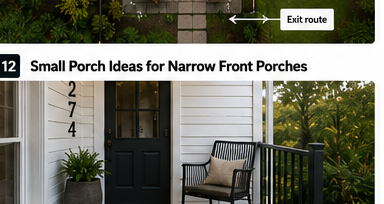
Vertical house numbers, a wall-mounted light, one tall narrow planter, or a restrained wreath can add identity without filling the floor. Attached items should use suitable hardware and placement, with landlord or association approval where required.
Keep the address readable and avoid decor that covers security devices, peepholes, cameras, or door hardware. Plants should be chosen for the porch’s actual light and exposure and pruned before they enter the route.
Keep the floor visually continuous
One properly sized outdoor mat is often enough. Layered mats can look generous in photos but may interfere with door clearance, collect debris, or create extra edges. Check the full door sweep and follow the care guidance for the mat and porch surface.
A limited palette makes the porch read as one space. Repeat the door color in a planter, cushion, or small detail, and allow visible floor around each element.
Lighting should clarify the entry
Prioritize the lock, step transitions, address, and visitor’s standing zone. Existing hardwired fixtures should be maintained and replaced through appropriate electrical practices. Portable or solar accents can supplement visibility where suitable, but they should not obstruct handrails or create glare.
For a broader comparison of fixture roles, see Best Outdoor Lighting for Small Patios.
Plan for weather and maintenance
A covered porch still receives wind-driven rain, dust, pollen, sun, and temperature changes. Choose items whose current outdoor-use and care instructions match the exposure. Make a seasonal storage plan for cushions, rugs, and decor rather than crowding the entry with bins.
Narrow-porch checklist
- Mark doors, steps, railings, utilities, and the visitor standing zone.
- Choose one primary porch function.
- Test furniture in its occupied position.
- Use one vertical accent and one floor-level accent before adding more.
- Keep the address, lock, doorbell, handrail, and required route accessible.
- Confirm property permission before mounting or attaching anything.
- Review the porch from the sidewalk and remove one competing element.
The takeaway
A successful narrow front porch makes arrival easy and adds just enough character to feel intentional. Start with the door swing and standing zone, then choose either one slim seat, one narrow bench, or no seating at all. Vertical details, focused lighting, and a restrained palette provide more impact than a crowded collection of small decor.