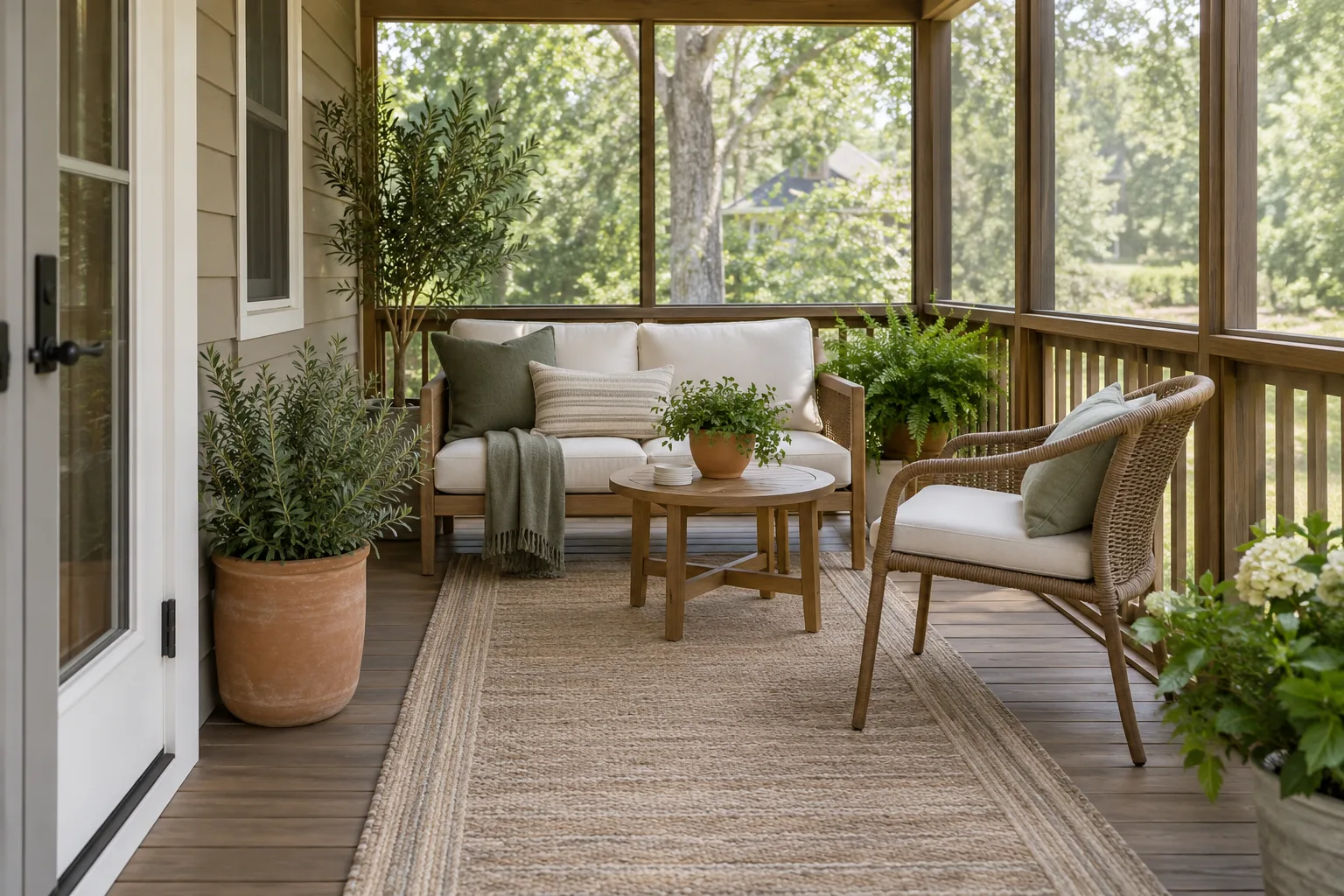
A small screened porch feels crowded when furniture interrupts the route, tall objects divide the view, and every wall is asked to store something. It feels larger when the doors work easily, one activity has priority, and enough floor and screen area remain visible.
Treat the porch as a transition between indoors and outdoors rather than as a smaller copy of the living room. Start with the doors, screens, and weather exposure; then choose the least furniture needed for the way the porch will actually be used.
Map every door and fixed element
Draw the room from above. Mark doors and their full swings, steps, screen panels, posts, outlets, lights, fans, vents, windows, and any access panels. Include the route people use to reach the yard or another exit.
Keep required exits, door hardware, and circulation unobstructed. General movement suggestions are planning guidance, not universal code requirements. Actual requirements vary by property, door configuration, local rules, and lease or association restrictions.
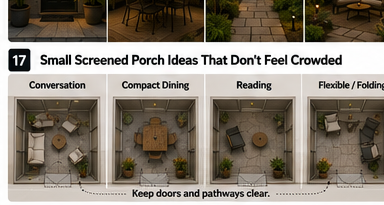
Choose one primary layout
| Primary use | Core furniture | Why it stays compact | What to avoid |
|---|---|---|---|
| Conversation | Two upright chairs and one small shared table | Creates a complete social group with three pieces | Extra accent chairs along the route |
| Dining | Compact table and two chairs | Supports meals without a second lounge zone | Oversized table sized for rare gatherings |
| Reading | One comfortable chair, light, and drink surface | Prioritizes comfort for one person | Deep sectional or multiple side tables |
| Flexible use | Folding table and stackable or folding chairs | Floor can reopen between uses | No storage plan for folded pieces |
| Garden room | Slim bench plus one plant grouping | Keeps the screen perimeter mostly visible | Pots across every corner and sill |
A porch that cannot comfortably hold separate dining and lounging zones should not try. Choose the activity used most often and let occasional functions use folding or movable pieces.
Use low-back, open-leg furniture
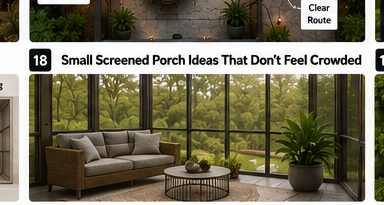
Low-back chairs and benches preserve views across the porch and through the screens. Open legs reveal more floor than a solid base, which can make the room easier to read. Comfort still matters: upright does not need to mean rigid.
Compare the occupied depth, including knees and recline, not just the frame. The furniture framework in Best Patio Furniture for Small Spaces applies here, with the added need to protect screen walls and door routes.
Keep sightlines open
Place the tallest element near a solid wall, post, or corner rather than in the center of a screen panel. One tall plant can frame the view; several medium-height pieces spread around the perimeter can create a visual fence.
If curtains or shades are permitted, they need secure hardware and a way to remain fully clear of doors, screens, and the route when open. Follow the product’s installation and wind instructions and confirm property approval.
Choose a rug from the furniture footprint
A small rug can unify the seating group, but it should not catch a door or cover drains and access points. Decide which furniture legs contact the rug and confirm that the surface and rug can dry according to their care instructions.
Leaving a border of visible porch floor helps the room feel less filled. If a suitable rug creates awkward edges in the route, skip it.
Use one closed storage location
A storage bench can serve seating and organization, but its lid needs room to open and the contents need protection appropriate to the exposure. A slim cabinet may use height more efficiently where a suitable solid wall and clear door swing are available.
Do not place storage against screens in a way that prevents inspection, cleaning, or repair. Keep cushions limited to the number actually used.
Layer lighting without filling the room
Use existing hardwired lighting for entry and general visibility, then add one portable task light for reading or dining if needed. Avoid cords across the route and confirm outdoor or damp-location suitability for the exact porch conditions.
Compare lighting roles in Best Outdoor Lighting for Small Patios. Do not use outdoor combustion heaters or fire features in a screened or enclosed porch unless a product is expressly designed and approved for that exact application and all manufacturer and local requirements are met; ordinary outdoor combustion products should not be used indoors or in enclosed spaces.
Create calm with repetition
Repeat one wood tone, one metal finish, and two or three colors. Use the same planter style for any grouped plants and leave some screen panels unframed by decor. Visual rest is more effective than adding tiny accessories to every surface.
Plan the porch as part of the entry
If the screened porch connects to a narrow front approach, coordinate the arrival sequence with Small Porch Ideas for Narrow Front Porches. Mats, shoes, packages, and pet supplies should have one defined place outside the door route.
Editing checklist
- Mark both door swings and the required route.
- Choose one primary activity.
- Place only the core furniture for that activity.
- Move tall items to a solid edge or corner.
- Keep screen access and views open.
- Use one rug, one storage location, and one portable light only if they solve a real need.
- Remove any piece that must be shifted for ordinary door use.
The takeaway
A small screened porch feels spacious when it has one clear purpose and an uninterrupted route. Two chairs and a shared table, a compact dining set, or one generous reading chair can each be enough. Low furniture, visible floor, open screens, and restrained storage create more comfort than filling every edge.