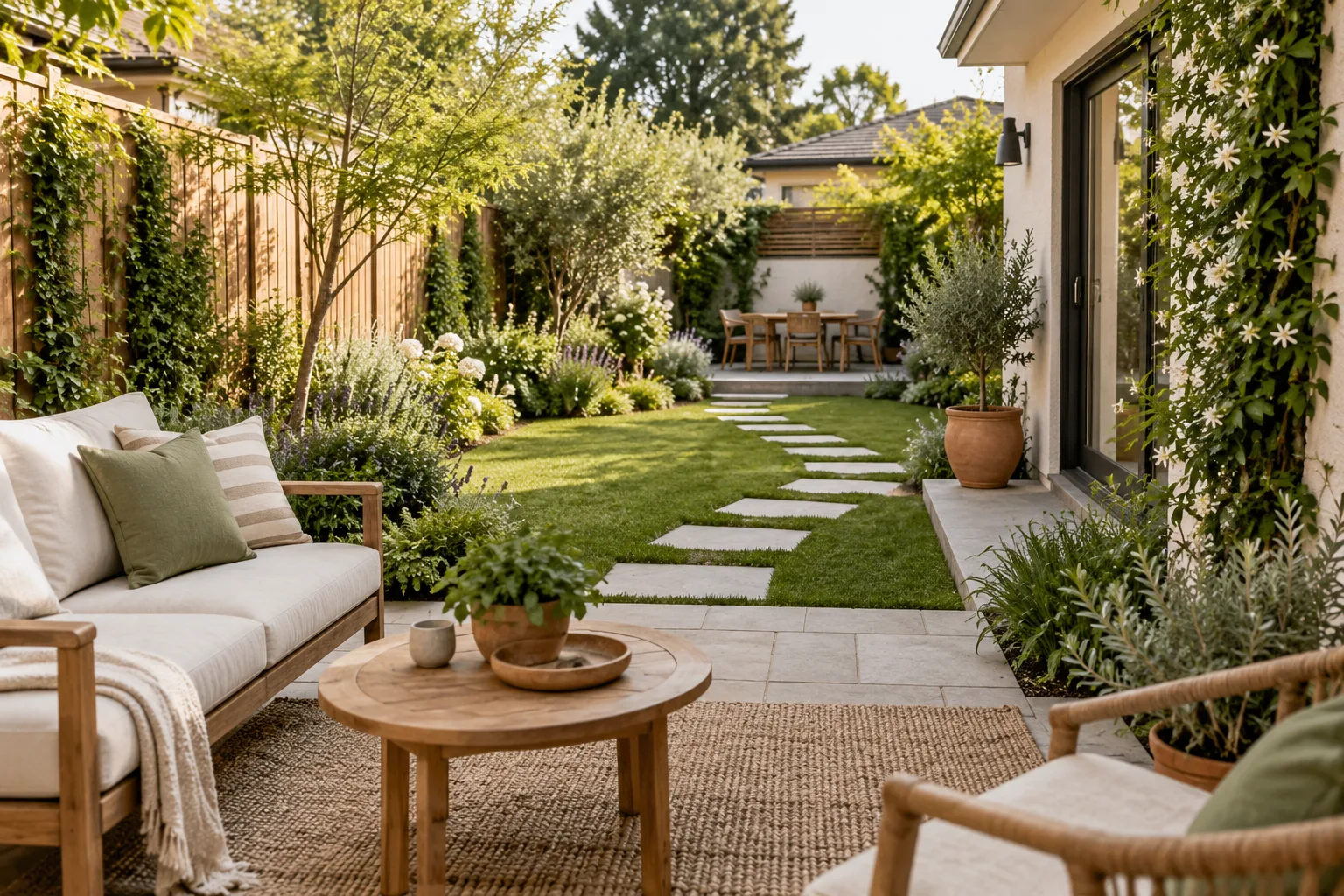
A small backyard feels bigger when the eye can understand it quickly and still has somewhere to travel. Cluttered routes, many tiny zones, mixed materials, and furniture scattered through the center shorten the view. A clear path, a restrained palette, and one strong destination create depth without changing the property lines.
The goal is not to hide the yard’s size. It is to make every part feel connected and useful. Measure first, choose the route, and edit before buying new features.
Build one clear route
Stand at the door and identify the path people use to reach seating, storage, gates, utilities, and garden areas. Make that route continuous and visually easy to follow. Repeated pavers, gravel, decking direction, or a clean lawn edge can connect the spaces.
Keep required exits, gates, drains, utilities, and access points unobstructed. Circulation suggestions are general planning guidance; actual property, local, lease, and association requirements vary.
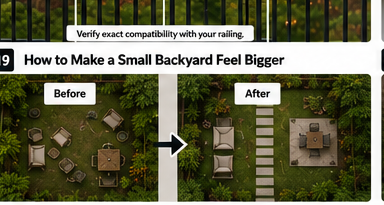
Use fewer, stronger zones
A limited yard rarely needs separate dining, lounging, gardening, fire, play, and storage zones. Choose two priorities and let one area serve more than one use. A dining table can double as a work surface; a bench can define the edge of the garden and provide seating.
| If the priority is | Primary zone | Secondary zone | Element to remove first |
|---|---|---|---|
| Outdoor meals | Compact dining near the house | Planting or open end point | Separate lounge set |
| Quiet seating | Two-chair conversation area | Layered garden view | Large dining table |
| Gardening | Clear path and productive beds | Small resting bench | Scattered decorative pots |
| Flexible family use | Open central surface | Storage at one edge | Permanent furniture in the center |
| Entertaining occasionally | Everyday compact seating | Folding pieces stored nearby | Oversized set sized for rare events |
Keep the center lighter
Placing the largest items against useful edges often preserves a longer view through the middle. A bench at the far end can become a destination, while a shallow dining group near the house leaves the center readable.
Avoid lining every fence with equal-depth furniture and planters. Vary planted depth while protecting the route, and allow the eye to reach at least one quiet surface.
Extend the view diagonally
A diagonal line is longer than a straight view across the narrowest dimension. Angled pavers, a rug, or the orientation of a compact table can direct attention toward a corner focal point. The angle should support movement rather than create leftover wedges that collect clutter.
Place the focal element—one specimen plant, sculptural pot, small tree suited to the site, or simple bench—where the diagonal ends. Keep it visually strong enough that several smaller accents are unnecessary.
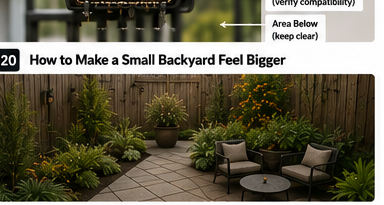
Repeat materials and colors
Using the same paving tone, planter family, and wood or metal finish reduces visual stops. Repetition does not require identical products; it means limiting the number of unrelated finishes competing in one view.
Carry one interior color outside through the door, cushions, or planters to strengthen the connection between house and yard. Choose materials for actual exposure and maintenance, not only for appearance.
Layer plants instead of making a flat border
A uniform row of plants along the fence can emphasize the boundary. Layer low ground-level planting, medium foliage, and a few taller elements so the edge is partly concealed and the eye reads depth. Select plants for mature size, light, soil, water, climate, and local guidance.
Leave enough access for pruning, drainage, fence care, and utilities. Vertical planters can concentrate greenery where suitable; compare formats in Best Vertical Planters for Balconies and Small Patios.
Use low furniture near the main view
Low-back chairs and benches allow the eye to continue beyond the seating zone. Open-leg furniture exposes more floor and feels lighter than solid bases. Place deep or tall storage at a less prominent edge where doors and lids can operate.
For dimensions and furniture types, see Best Patio Furniture for Small Spaces. If the yard is long and tight, use the zoning plans in Small Backyard Ideas for Narrow or Limited Spaces.
Conceal storage, not access
One defined storage location makes the rest of the yard easier to edit. Choose a bench, compact box, or cabinet based on the items that genuinely need outdoor storage. Keep the lid or door movement out of the route and preserve utility access.
Use lighting to create depth after dark
Light the near step or table, one middle layer, and the far focal point instead of washing every surface with equal brightness. Shield glare and respect neighboring windows. Verify all fixtures, power arrangements, and mounting for the outdoor location.
A bigger-feeling backyard editing sequence
- Photograph the yard from the main door.
- Mark one continuous route and two priority zones.
- Remove objects from the center and required access points.
- Choose a far or diagonal focal point.
- Repeat a limited set of colors and materials.
- Group plants in layers rather than scattering pots.
- Consolidate storage and reassess the view before buying anything.
The takeaway
The most effective way to make a small backyard feel bigger is to simplify its visual structure. One clear route, two useful zones, a longer diagonal view, repeated materials, and layered planting give the eye room to move. Removing one redundant furniture group often changes the space more than adding another decorative feature.