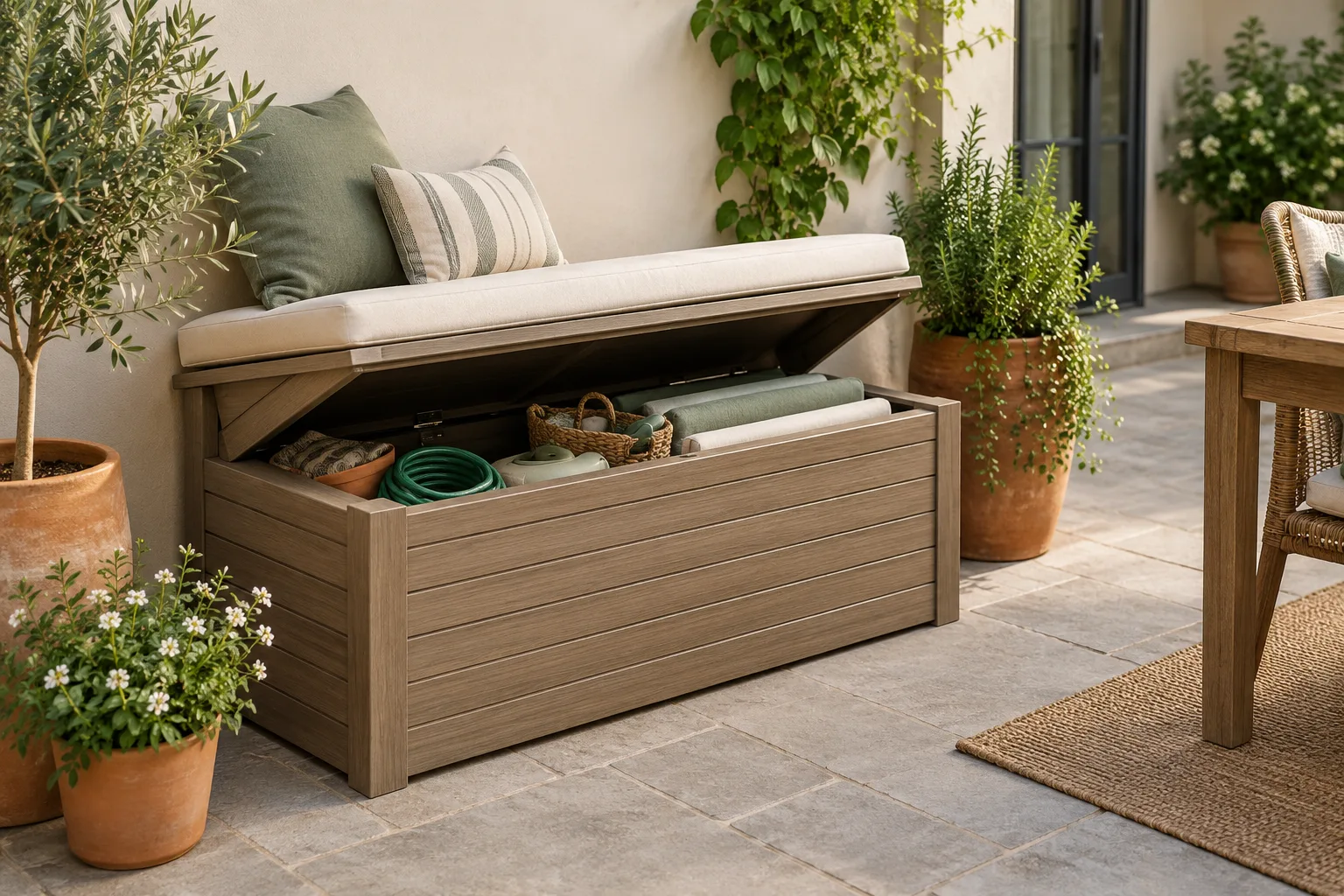
The best outdoor storage bench for a small patio is not necessarily the model with the largest advertised capacity. It is the bench that fits the wall, opens fully, protects the right items for its exposure, and remains comfortable enough to earn its footprint as seating.
Start with what needs to be stored. Seat cushions, gardening hand tools, children’s outdoor toys, and grilling accessories have different requirements. A bench that is appropriate for one group may not be appropriate for another.
Quick comparison: storage bench types
| Bench type | Best for | Small-space benefit | Watch for |
|---|---|---|---|
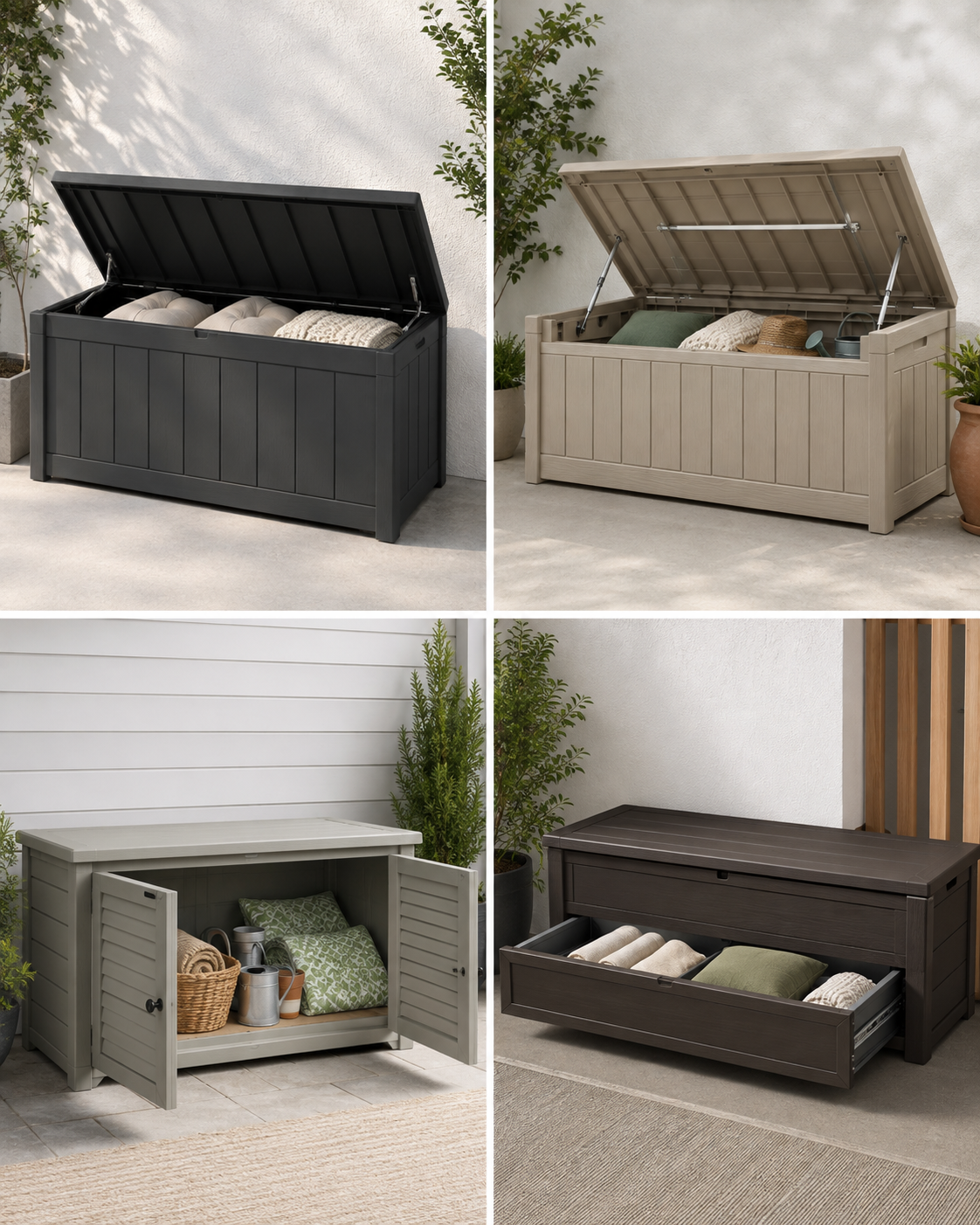
| Low deck box bench | Cushions and bulky light items | Simple shape; may double as casual seating | Seat comfort and lid clearance |
| Upright-backed storage bench | Regular seating | Combines back support and storage | Greater total depth and height |
| Compact resin bench | Lower-maintenance storage | Often easy to clean and move | Construction and stability vary |
| Wood storage bench | Warm, furniture-like appearance | Can anchor the seating area | Care needs and exposure limits |
| Ventilated slat bench | Items that benefit from airflow | Visually lighter frame | Not sealed against wind-driven rain |
| Backless storage bench | Occasional seating below a window | Lower visual profile | Limited back support |
This comparison is about formats, not a ranking of specific products. Capacity claims, water protection, load limits, and materials must be checked against the current manufacturer information for each bench.
This post may contain affiliate links. If you buy through them, Small Space Outdoors may earn a commission at no additional cost to you.
Three current storage benches to compare
These are non-ranked examples for three different small-patio priorities. Each listing was available when checked, but product details and availability can change. Small Space Outdoors has not personally tested these products. Measure the complete operating footprint and verify the current Amazon listing before ordering.
For regular seating with concealed storage: Keter Storage Bench Deck Box
Amazon’s listing combines an upright-backed bench format with storage beneath the seat. It fits a patio where one piece needs to replace both separate seating and a storage box. Measure the full bench depth, allow room for the seat lid to open, and confirm the current seating and storage instructions.
View the Keter storage bench on Amazon.
For a cushioned, backless format: Tangkula Outdoor Storage Bench
The listing shows a backless deck-box format with a seat cushion and a gas strut for lift-up access. This type can work where a lower visual profile matters and there is a practical plan for cushion care. Confirm the current liner and cushion instructions, and leave enough clearance to open the lid fully.
View the Tangkula cushioned storage bench on Amazon.
For a compact multipurpose surface: Suncast Outdoor Deck Box
Amazon’s listing presents this low deck box as storage that can also serve as a seat, ottoman, or side surface. It is relevant when a small patio needs a lower-profile storage piece instead of a full backed bench. Confirm the current seating guidance, make sure the lid can open in place, and match the contents to the patio’s actual weather exposure.
View the Suncast outdoor deck box on Amazon.
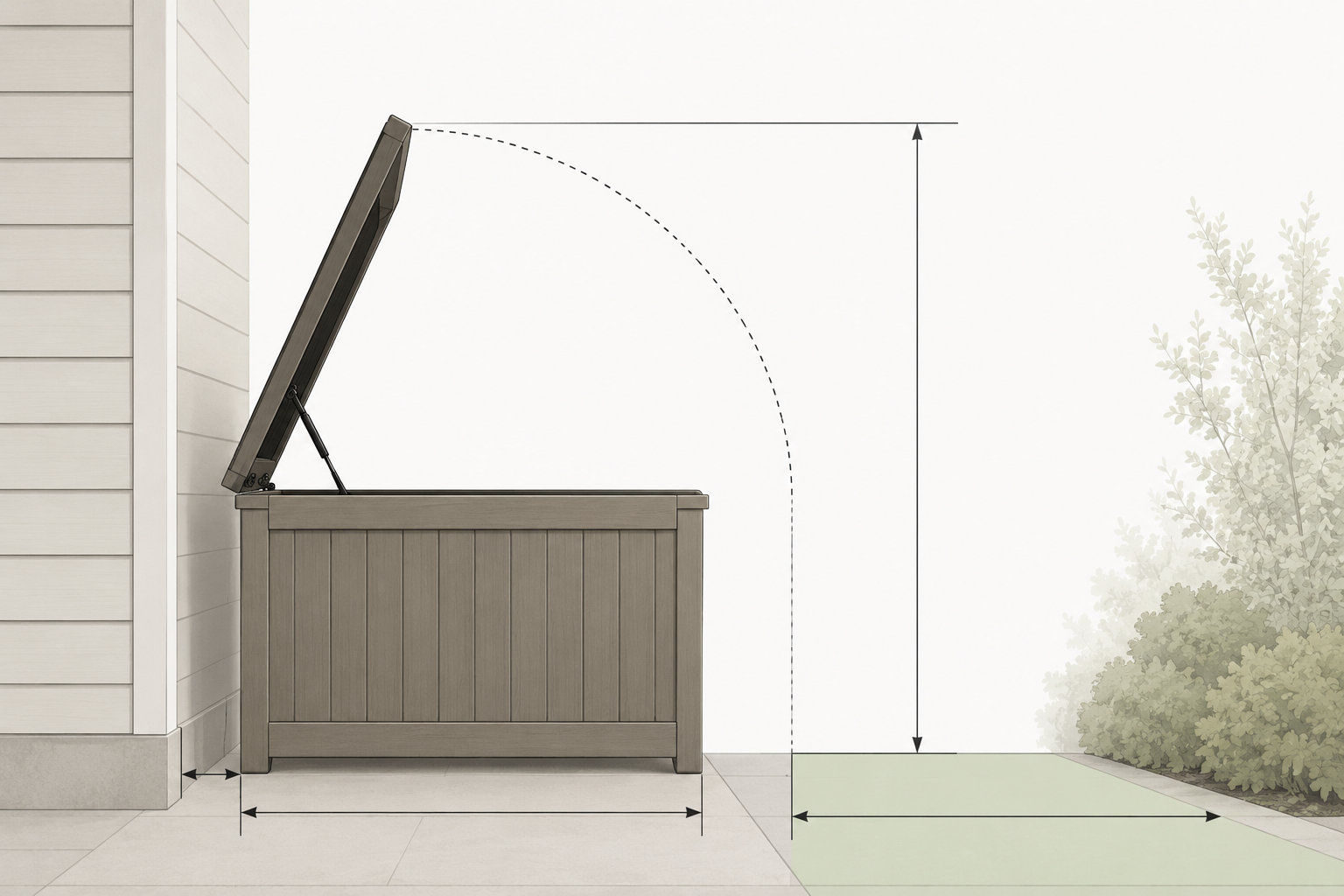
Measure the bench with the lid open
Record the maximum width, depth, and height that the patio can accept. Then consider the operating space. Hinged lids may rise behind the bench, slide back toward a wall, or need a clear zone above. Drawers and front doors need open floor in front.
- Measure the proposed wall or edge.
- Subtract room for door trim, outlets, hose connections, rail posts, and drainage.
- Check the product’s complete exterior dimensions.
- Find the open-lid or open-door clearance in the manufacturer instructions when available.
- Tape the footprint on the patio and test the walking route.
- Confirm that stored items will fit through the opening, not just inside the cavity.
A bench should not narrow the required exit route or make a door awkward to use. If it sits near a dining chair, test the chair pulled out and the storage open at the same time.
Do not treat “weather-resistant” as “waterproof”
Outdoor storage descriptions can use terms such as weather-resistant, water-resistant, or waterproof, but those words do not automatically mean the same thing across products. Construction details, lid overlap, seams, ventilation holes, drainage, and wind direction all affect how contents fare in real conditions.
Read the manufacturer’s use and care information. If the stored items must stay completely dry, consider a suitable sealed inner container or move them indoors. Never store electronics, important papers, chemicals, fuel, food, medication, or other temperature- or moisture-sensitive items in a patio bench unless the product and conditions are specifically appropriate.
Ventilation matters too
A tightly closed container can trap moisture from damp cushions or humid air. Ventilated construction may help airflow, but it can also admit dust or wind-driven moisture. Let textiles dry fully before storage and inspect the interior regularly for condensation, odors, insects, or mildew.
Place the bench where water does not pool around its base. Keep drainage paths open and follow any floor-protection recommendations. On wood decking or a balcony surface, confirm that feet, wheels, or a mat will not trap moisture or cause damage.
Choose a material for the actual exposure
Resin or molded plastic
These benches are often easy to wipe clean and may be lighter than wood or metal options. Look beyond the material label: wall construction, hinges, reinforcement, UV exposure guidance, and assembly affect performance. Lightweight pieces may require special attention in windy locations.
Wood
Wood can feel like indoor furniture and pair naturally with planters. It generally requires care appropriate to the species, finish, and climate. Confirm whether the bench is intended for uncovered exposure and how the manufacturer recommends cleaning, refinishing, and seasonal storage.
Metal
Metal frames can look slim and provide strong visual structure, but finish damage, corrosion risk, heat in direct sun, and condensation deserve attention. Check whether the storage compartment is metal or a separate liner and follow care instructions for the coating.
Woven synthetic surfaces
Woven exteriors can soften the appearance of a storage box, yet the weave itself does not describe the interior protection. Find out whether there is a separate shell or liner, how drainage works, and whether the construction is intended for the patio’s exposure.
Make sure it works as a seat
If seating is part of the reason for buying the bench, verify the manufacturer’s intended use and stated load limit. Check seat height, depth, edge shape, back support, stability, and whether the lid flexes or shifts. Do not assume every deck box is designed for sitting.
A cushion can improve comfort but creates another item to dry and store. If the bench will be used only while putting on shoes or during occasional gatherings, a firm backless seat may be adequate. For everyday lounging, a supportive backed bench may justify its larger footprint.
Compare that footprint with other seating in Best Patio Furniture for Small Spaces.
Lid and hardware details worth checking
- Soft-close or lift assistance: confirm how the mechanism works and whether it requires maintenance.
- Child safety: follow all manufacturer warnings; storage benches are not play spaces.
- Lock provision: a lock may deter casual access but does not make the contents safe for valuables.
- Hinges and fasteners: check outdoor suitability and care guidance.
- Handles or wheels: useful only if the loaded bench can be moved safely.
- Interior shape: ribs, hinges, and sloped walls can reduce usable space.
Best placement on a small patio
Place the bench along an edge that does not carry the main walking path. A solid wall may provide a visual anchor, while a backless model may fit below a window if it does not interfere with access. Avoid locations that block vents, meters, railings, drains, or maintenance areas.
Use the bench to replace another piece, not simply to add storage. It might take the place of two occasional chairs, a collection of loose bins, or a console. If the patio already has enough seating, a narrower vertical cabinet or indoor storage location may use the space more effectively.
For a complete square-patio plan, see How to Arrange Furniture on a 10×10 Patio. For a less cluttered visual reset, use Small Patio Makeover Ideas That Don’t Feel Crowded.
A final buying checklist
- Exterior dimensions fit the taped footprint.
- The lid, doors, or drawers can open fully.
- The opening and interior shape fit the intended items.
- The manufacturer describes the bench as suitable for the planned seating use, if applicable.
- Weather and water-protection language matches the exposure and storage needs.
- Ventilation and drainage are appropriate for the contents.
- Materials and maintenance requirements suit the climate and available care.
- The empty and loaded bench can be assembled, delivered, and positioned safely.
- Building, lease, balcony, and egress rules are satisfied.
The takeaway
For a small patio, choose a storage bench by access and function before capacity. Measure the open lid, understand the limits of weather protection, plan for ventilation, and confirm that the product is actually intended for seating. The right bench replaces clutter or another piece of furniture; it does not create a new obstacle.